• I was shocked to hear that one of the two alligators at the Academy of Sciences had bitten the other alligator so badly that he would lose a toe.

    Actually, I wasn't shocked. No one was shocked. Alligators are bitey. And it even looks as if Claude, the wounded party, will get to keep the toe. But I did want to know the details. Fortunately the San Francisco Chronicle sent justly-famous science editor David Perlman to get the full story.

    The California Academy of Sciences (in Golden Gate Park in San Francisco) which includes the Steinhart Aquarium, has a fancy new building. An alligator pond on the ground floor houses Bonnie and Claude. Bonnie is a standard American alligator, blackish, toothy, and seven feet long (Alligator mississippiensis). She's what biologists call the “wild type.” Claude, however, is an albino, one of those genetically variant animals zoos love to exhibit. They're from the St. Augustine Alligator Farm, which supplies albino and wild type gators to the trade.

    An albino alligator is the reptile version of a white tiger. Although the recent news that the iguanas of the Galápagos include a previously unrecognized species, the “pink iguana” (no final scientific name yet), makes me think that zoos will soon clamor for the glamor of pink. Pink lizards might be a bigger draw than white gators.American_Alligator_001 
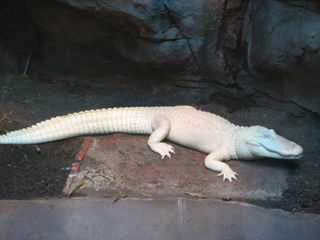
    In the pond where Bonnie and Claude live,  there is a delightful heated rock. They love to bask on it, and there should be room for two. But the other day Bonnie was relaxing there when Claude swam up. Trying to get on the rock, he bumped Bonnie. She bit him on what the aquarium curator, no doubt seeking to provide accessible knowledge to the public, calls the “right pinkie toe.” He didn't want to dazzle us with intimidating talk of a "distal phalanx," I guess. But we, the gator-data-consuming public, don't need to be talked down to, and we demand more precise information. Which right pinkie toe? The bite was on a front foot, a forefoot. That makes it a foretoe. Right pinkie foretoe. Already we know more. Wait, he's a water creature, let's use nautical terminology. Starboard pinkie foretoe!

    At the aquarium they hauled Claude out with a crane, and wheeled him down to the basement for X-rays, antibiotics, and a three-week stay in medical custody. He is a star, who will receive the highest level of care. No doubt they will give him the standard medical forms to fill out. This should give him a chance to decide whether to list Bonnie as the individual to be notified in case of an emergency.

    Albino animals often have impairments in vision. They're white because they lack the pigment melanin in their skin. They also lack pigment in their eyes, and as a result they have bad eyesight. Claude is said to be nearly blind. This explains a lot. He could not see Bonnie, and could not see that she was giving him A Look. (I feel sure of this.) Poor blind fool missed that warning sign and his starboard pinkie foretoe paid the price.

  • From the excellent documentary Saving Luna, which is about a lost young killer whale that took up residence in Nootka Sound, my favorite quote is a plea to Luna: “Ignore that float plane. Good whales don't play with float planes.”

  • In the middle of California's broad Central Valley, the Sutter Buttes rear up, surrounded by flatness on all sides. Because the craggy volcanic buttes just barely beat 2,000 feet, the place is sometimes called the world's smallest mountain range. On an elevation map, like this, courtesy of the U.S. Geological Survey, the Buttes are that bump in the Central Valley, halfway up the northern end.

    Digital-elevation-map-california

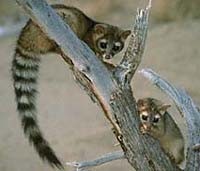
    The whole of the Sutter Buttes is only 75 square miles, essentially all private property in the form of a dozen ranches. Because it doesn't have year-round water, and is apparently hell-hot in summer, it has escaped most development. The place's isolation in the middle of the lower elevation flats make it an island, with odd wildlife distribution results. It's apparently a hotbed of ringtails, for instance.

    Bassariscus

    It is so small that devotees like Walt Anderson, the author of Inland Island: The Sutter Buttes, can tell you that there is exactly one ponderosa pine there, on North Butte. It is so well-documented that Anderson can also report that in 1988 a flock of 32 white pelicans, a species otherwise only seen flying far overhead, descended to a stock pond to feast on goldfish swimming there.

    Some ranchers in the Buttes allow limited access for hikers. Recently I went on a hike offered by the Middle Mountain Foundation. It was a mild fall day, so clear we could see Mount Lassen 80 miles away. We could also see urban lands, starting very close by and stretching down to Sacramento.

    In a place so close to intense civilization, there was no litter. None. No bags, no bottles, no cans. There were no other hikers. Aside from old stone walls running across the hills, there were no direct signs of human activity until we got to some ranch buildings on the way out. But there were indirect traces, for the land is full of cattle and wild pigs. There were two sizes of hoof prints, cow patties, and areas of torn earth where the pigs had been rooting.

    The cattle are raised for profit. The pigs, introduced long ago, are popular with many California hunters as a big game species. Yes, I eat beef, and occasionally wild boar.

    Those beautiful, quiet lands were uncanny. It's a place where people rarely go, yet you can turn your head and see where hundreds of thousands of people are. There's not so much as a bottle cap on the ground, yet the land is strongly marked by pastoral industry. This eerie place is a domain of meat.

  • Sometimes people get impatient when you try to identify a species. White-crowned sparrow or white-throated sparrow, really, what's the difference?

    To a sparrow looking for love, all the difference in the world. Even for humans, it can be important.

    While reading Red Arctic, by John McCannon, I came across a story demonstrating the value of careful taxonomy.

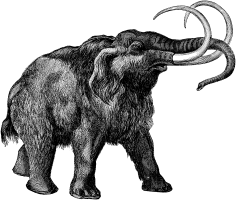
    It seems that in October 1937 urgent telegrams arrived in Moscow with the news that G. G. Petrov and his men had found the complete skeleton of a woolly mammoth on Wrangel Island, an extremely chilly place in the Arctic Ocean.

    Mammoth

    Petrov was the head of the Wrangel station of Glavsevmorput, a then-powerful Soviet governmental agency. Petrov and his Communist Party organizer, I. V. Shuvalov, assured everyone that the skeleton was in perfect condition.

    A complete mammoth skeleton was huge news in those days – a coup for Soviet science — and the Zoological Museum and the Academy of Sciences in Moscow fought over which would get it. An expedition was organized to recover the skeleton.

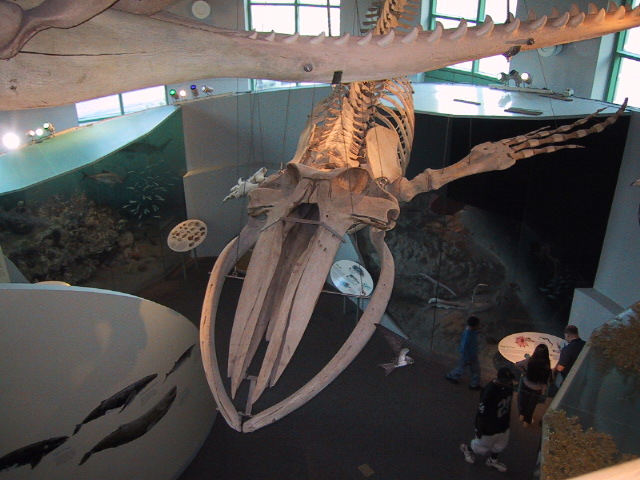
    But it was a fierce winter and most ships were trapped in ice. It wasn't until 1938 that the costly expedition made it to Wrangel, where they found that the skeleton was indeed in perfect shape, which enabled them to note that it was the complete skeleton of a beached whale. Not a mammoth. Rrr.

    Mammoths, like elephants, had no bones in their trunks, so their skulls wouldn't be as distinctive as you might guess at first. The skeletons of many whales feature long curved bones that resemble tusks.

    Whale_skeleton


    Photo by John Hritz.

    These were difficult times in the Soviet Union, the years of the Great Purge, and it was felt necessary to assign blame and punishment. The NKVD (forerunner of the KGB) investigated Petrov and Shuvalov, found them to be evil “wreckers” of the Soviet state and had them both shot.

    You see my point. In the adult white-throated sparrow, look for the yellow spot between the eye and the bill.

  • For  a story on a pit bull rescue organization, I was visiting Kim Ramirez. Kim has two dogs, and she was fostering a third, Spyder, a worried young dog who had been confiscated from the Michael Vick dog-fighting operation. I was there to meet Spyder, since the Vick dogs were celebrities. I also met the other two, Nala and Ross. Ross is a 60-pound pit bull mix, white with brindle spots, with a classic Hello-I-love-you pit bull bonhomie. Kim adopted him after the organization rescued him from the shelter. (Shelters overflow with unwanted pit bulls.)

    In order to have a place for three big dogs, Kim and her daughter live in a mostly industrial neighborhood, on the outskirts of town.

    After we talked about Spyder (who had retired to her crate to avoid stressful media attention), Kim showed me Ross's favorite game. We were in the kitchen, late afternoon sun leaning through the window. She got out a bottle of bubble-blowing liquid and blew a plume of bubbles. “Touch!” she said.

    Ross was delighted. He leapt into the air, catching bubbles. He flung himself clear off the floor. He twisted, trying to grab more than one bubble per leap. He jumped again and again, leaving no bubble unpopped. He looked at Kim hopefully – more bubbles? More bubbles?

    She blew more bubbles and Ross jumped for them, even the tiny ones.

    The pit bull rescue story was fascinating to research. There was a lot to learn, about dog fighting, dog breeding, dog rescue, and dog politics. Some of it was very sad. Some of it was encouraging. There was no space in the article for Ross.

    But the image that keeps coming back to me from that story is of Kim, and a big pit bull in a sunny kitchen jumping like a trout to catch bubbles.

  • As far as we know there are fewer than half a dozen Yangtze giant soft-shelled turtles left in the world and only one is female.

    The Yangtze giants (Rafetus swinhoei) are hard to overlook, since they get to be more than a yard long and can weigh a couple of hundred pounds. That means they've been easy to hunt — and perfect for feeding a crowd.

    When it was realized how endangered they were, a search was launched for survivors. A male was in the zoo in Suzhou, China. He's thought to be 100 years old. Two more males were found in Vietnam.

    When keepers at the zoo in Changsha, China, got the mailing about the turtles, they said they had a turtle who looked a lot like the one in the picture…. She was thought to be 80 years old. The Changsha turtle, now named China Girl, is indeed a Yangtze giant soft-shell, and was shipped to Suzhou to meet the male there. Neither had seen another turtle of the opposite sex in decades.

    China Girl and her new friend knew exactly what to do, and there was much rejoicing when China Girl laid eggs. (I am trying to tell this story tastefully, and avoid the “Ha ha, sexy oldsters!” tone found in much of the coverage. So please keep in mind that these turtles appear to be longer-lived than we are, and for us to snigger about them might be like nine-year-olds groaning and pretending to vomit when they see college students holding hands.)

    Though many of the eggs were fertile, not one hatched. Turtle experts blamed years of a low-calcium diet. China Girl had been fed beef and pork. A more suitable and calcium-rich diet would be fish and crayfish. Xie Yan, who runs the Wildlife Conservation Society's China program, says China Girl's diet has already been changed. “Next time will be better.” Lie Jinde, director of the organization that manages the Suzhou Zoo, says “Wait until next year. We ought to succeed.”

    At Suzhou, the turtles are protected. There's a guard, a surveillance camera, and bullet-proof glass. (Weirdly, there are people who would commit serious crimes in order to own the last female Yangtze giant soft-shelled turtle in the world. Some of them would try to breed her in the same way as the zoo, some would keep her as a trophy, and probably a few of them would make a point of eating the hardest to-get, most expensive, most selfish, and most evil turtle soup in the world.) So those things are needed.

    And of course there's the new regimen.  I vigorously support the new turtle diet!

    But I would also support making the turtles' lives better in other ways. A turtle can get bored.

    Here's the story of Pigface (from Becoming a Tiger):

    An unusual example of play in an adult comes from Pigface, a Nile soft-shelled turtle who arrived at the National Zoo in 1940. Six inches long, he was not really pig-faced, but he had the pointy nose and wide decurved mouth appropriate to his species. By the 1980s, Pigface was a yard long, and violently bored. Once a week he received a nutritious dead rat, and twice a week a dozen live goldfish.  The goldfish were the highlight of the week, and he pursued them “with speed and agility,” so zealously that until he caught them all he literally stopped only to breathe.  This filled 20 exciting minutes a week.

    In the 1980s keepers noticed that Pigface had begun to bite his front legs and rake his neck with his front claws, hurting himself badly. Suddenly grasping that he might be bored, they gave Pigface toys—basketballs and a floating hoop. This reduced Pigface’s self-mutilation, and he spent hours nosing and biting at the basketballs, pushing them across the water. As for the hoop, he could not only nose it, bite at it, and push it, but also chew it, shake it, pull it, kick it, and swim back and forth through it. Best of all he liked the hose the keepers used when they refilled the tank, enjoying the sensation of the water streaming over his head at exactly the right angle, and playing tug-of-war with the keeper on cleaning day by grabbing the hose and swimming backward with it, pulling it into the tank. (There is no reason to suspect that Pigface was hoping to pull his keeper into the tank, steal his keys, and make a getaway.)

    Nile soft-shelled turtles (Trionyx triunguis) are closely related to Yangtze giant soft-shelled turtles. I suspect that what's good for Pigface might be good for China Girl.

    Do those safe, well-fed turtles in Suzhou get to chase goldfish? Could China Girl maybe have a hoop? A hoop and a ball? A hoop and a ball and a chance to fight with a hose?

    Do happier turtles breed better? It's worth a try.

  • I am not a patient person. In wilderness settings, where my significant other likes to stand and gaze at the natural beauty all around, I want to explore, walk, clamber up things, turn things over, scurry and sniff. I can't repose the way he can. I would take the view that we just have two different ways of taking things in, each good, except for the fact that my impatience makes it hard for me to wait out wildlife. When some alarmed creature dives down a burrow, into a nest hole, or behind a branch, I'd like wait until it re-emerges. Or I'd like to do as many predators do: select a concealed vantage point, and wait until creatures who have no real wish to meet me come wandering along without a clue. But I can almost never bear to be still long enough.

    One April day, I went to the Fitzgerald Marine Reserve on the coast of San Mateo County, California, to examine the tidepools. The tide tables showed there would be an exceptionally low tide early in the morning on a weekday. As I hoped, there was no crowd. It was so early that no ranger was on duty to put out traffic cones to warn people away from the harbor seal rookery.

    Staying inland, on the sand, I walked south until I was past the rookery, where the seals and their pups lie near the water. I went out on the rocks, near the edge where waves lash the water. As I crouched, peering into a tidepool, I looked up and saw a seal sticking its head out of the water, looking at me. I got up and walked south to another tidepool, observed by the seal. It swam along slowly, keeping its head up so it could see me. I went to another tidepool, and another, and every time I looked up the seal was staring, swimming south to keep me under scrutiny. Okay, they're smart animals, and I'm kind of weird. Why wouldn't it be curious?

    Coming to a wide channel that had been drained by the retreating tide, I was amazed to see an abalone lying in the middle of the channel, out of water, upside down and motionless. There were no people out there who might have turned it over, and I couldn't think what else might have done it. Maybe it had been making a daring abalone traverse from one rock to another and suddenly been struck by a wave carrying a log or a boulder which knocked it loose. Or maybe it was dead, and had just relaxed its grip as it died. That was a grim idea, but it suddenly seemed the most likely. I turned it right side up, half in and half out of the water in a small pool. It was still motionless.

    Here was a test of my ability to be patient. I wanted so badly to see if this abalone was alive, and I forced myself to sit and wait quietly. I would be still for five minutes. I didn't move, but in my head I fidgeted: silently I counted the seconds. After I had counted two minutes, a small wave swirled around the abalone. I almost thought it shifted a bit. But that might have been my imagination.

    In the water, other creatures were moving. A purple sea urchin waved its spines and feet busily. A starfish the size of a dime began traveling along a frond of seaweed. A tidepool Johnny (a fish, also called a sculpin) scudded across the sand. Hermit crabs, far more impatient than me, bustled around with gesticulating antennae.

    After I hit the five-minute count, I pushed the abalone with my finger. It was gripping the rock so firmly I couldn't shift it at all. It was alive. So that was good news about the abalone. I stood up and saw that no one was watching. I sat still for so long I bored the seal. That was good news about me.

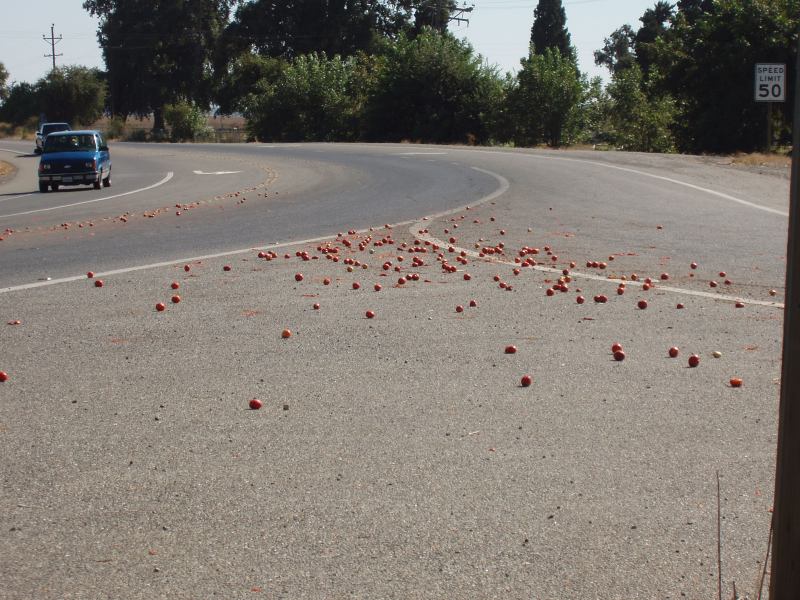
  • In late summer successful gardeners become superbly generous, even pushy. The fields of California burst with extra tomatoes. All over the Central Valley, tomato trucks bomb along blazing hot roads. You know they are tomato trucks because they have open tops and spill tomatoes, especially on bumps and curves. Roads with tomato-spangled corners mean the end of summer.

    Tomato_Trucks

                                                                  you can spot summer[Carl McCabe http://creativecommons.org/licenses/by/3.0/]

    These tomatoes aren't meant to be sold by the each. They'll be pounded, concentrated, and purified into sauce and catsup, so if they get smashed on the ride to the plant or a few hundred get lost, it doesn't matter. Abundance brings carelessness.

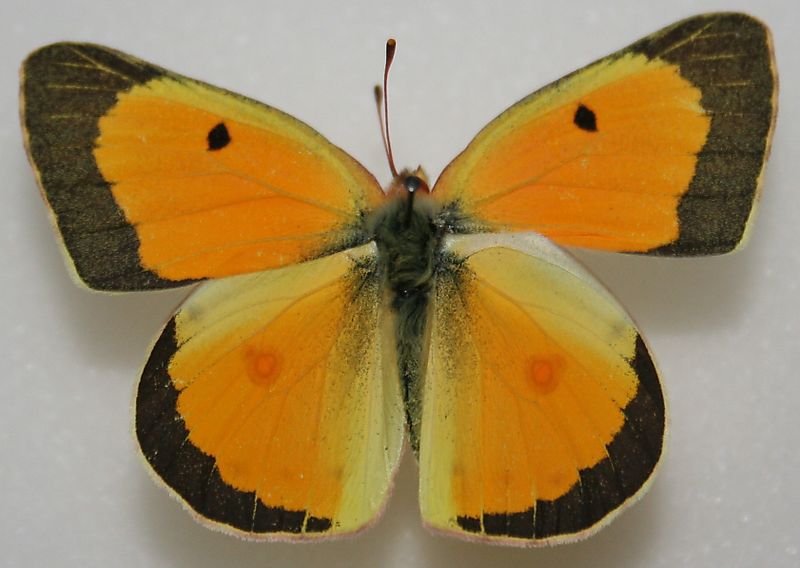
    Last weekend we were driving through the Valley. It was hot, hot, hot. On a back road we slowed when a flight of sparrows rose from a scatter of spilled tomatoes. Suddenly the air was full of yellow butterflies.

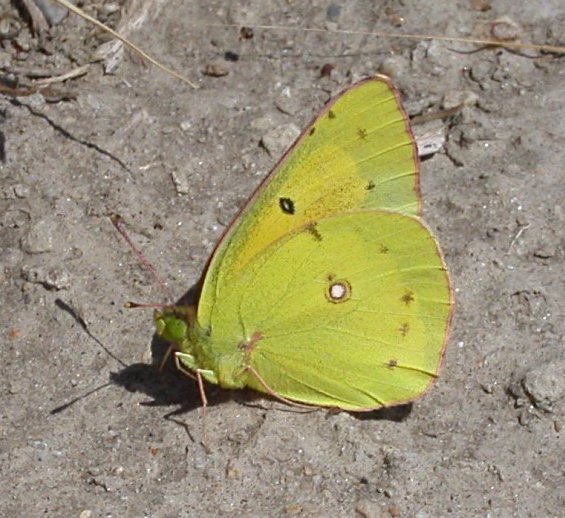
    They were Orange Sulphur butterflies (Colias eurytheme). As butterflies they drink nectar, but when they're children (caterpillars), they eat plants in the pea family, especially alfalfa. They're a native species that hit a bonanza when humans started planting alfalfa. In a paper about exotic crops that please local butterflies, Graves & Shapiro write that you can spot summer alfalfa fields from a long way away by the yellow clouds of butterflies.

    Orangesulphur

    Singly and in revolving pairs, they fluttered across the road, heedless of cars and trucks. We expected this to be a passing thing, but as we kept driving, they kept swooping over the road, through the burning air, crashing against windshields and grilles.

    With so many butterflies, the number killed by cars is unimportant to the species. But we couldn't bear the havoc, so we turned back to another road, more traveled by people, less traveled by butterflies.

    Red and yellow scatters, on the ground, in the air. An explosion of abundance and abandon, and summer's over.

    Male_Orange_Sulphur_Megan_McCarty18

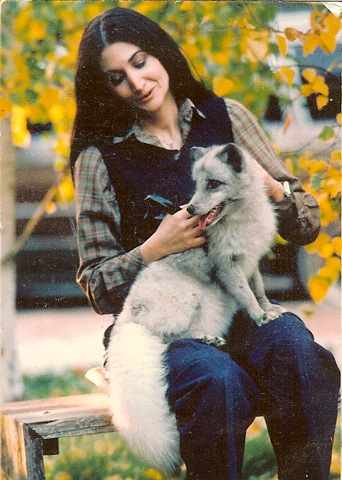
  • For many years my friend Mary Lynn Fischer lived with QuickView, an Arctic Fox (Alopex lagopus). Quickie's immediate family had been raised for the exotic pet trade; her ancestors just before that were bred for fur farms; and before that they had been wild.

    Quickie herself was both tame and wild. When you came over to the house, Quickie was liable to give you a horrified look and vanish for the rest of your visit. But you might also be eating dinner and feel little forepaws on your back when Quickie hopped up on the back of furniture to peer over your shoulder and see what you were eating.

    Mary built a cage with zoo-level security in order to get a Fish & Game permit to possess a wild animal, and she lived in fear that the government would one day decide that people shouldn't be able to keep wildlife in suburbia and confiscate Quickie. At any given moment Quickie might be in the cage, or she might be playing with the dog, curled up on the bed, or requesting admission to her favorite cranny, the freezer compartment of the refrigerator.

    Mary has an intellectual as well as an emotional interest in animals (and a great deal of first-hand knowledge). Here's part of an email she recently sent me about her relationship with Quickie:

    For years I had wondered about the well known propensity of Alopex to taming. People have  come up with all sorts of theories about it, but the truth is more interesting than one might think.

    Arctic Foxes tend to find and attach themselves to Polar Bears, who tend to hate Arctic Foxes. The fox follows the bear and scavenges from the bear's kills. From the fox's perspective, I guess, it's a symbiosis. From the bear's, it's a nuisance.

    I examined pictures of the lives of these two coexistent creatures doing whatever it is that they do, over the years, and then it struck me: The fox shadows the bear, wakes the bear up when it sleeps in. ("Wake up! Wake up y'ol' bear! It's time to rise and shine and fetch me breakfast!") The bears grit their teeth at these ministrations. They seem not to particularly dote on their foxes, but the foxes adore their bears. They understand perfectly how useful a large predator can be. There are even pictures of Arctic Foxes fighting over "custody" of a particular bear ("Hey! This is MY bear. Go get your own bear!") When they find an unattached bear they shadow him or her, just out of paw range—actually a rather large distance. They wait until the bear makes a kill. Then they stand about thinking how hungry they are until the bear has had a surfeit and goes to sleep, whereat they take their tithe.

    The bear surely does not miss the amount that an Alopex extracts on a good year. It's the principle of the thing. Some bears are relatively tolerant and good humored. Still others look darkly at the fox hovering nearby, and attempt to sleep on top of the carcass, to prevent the fox from even thinking of taking a bit. This does not work. Every now and then, a bear—goaded beyond everything that is holy by the cheek of the little foxes, has been observed to try to take a swipe at them.

    PhotoMy entire life with Quickie was marked by occasional explosions when Whit forgot yet again, and put his slippers beside the bed.  And then there would be the sight of a very happy fox, rushing off importantly with slippers dangling from her mouth, with Whit in hot pursuit.  He never learned. After a while, he took to buying the particular cheap slippers he fancied by the case. It's amazing how quickly a small animal with jaws like a machine vise can get through a case of rubber huaraches. And of course, he had trained her. Because Quickie thought it was wonderful. She didn't quite understand why this was true, but all she had to do was to steal his slippers, and no matter how tired Whit was, he'd rise like Lazarus from the grave, uttering terrible threats ("you'd make up into a great pair of mittens!") and chase her. And chase games are the one thing that little foxes worldwide love. 

    This symbiotic relationship with foxes is not limited to the high arctic. The foxes in the Israeli desert loved to shadow hyenas in troops, and the hyenas felt about them the same way that the Polar Bears felt about Alopex. Yet Macdonald relates that few hyenas could be seen without a retinue of foxes at their heels. Occasionally, one of them got much too cheeky, and ended up inside the hyena. But that was rare. I don't think anyone has witnessed a Polar Bear actually getting its fox, but it wasn't for want of trying.

    Reflecting on this one day, and weighing all the scientific speculation about the ease with which Alopex can be tamed, I had a sudden realization. Quickie took to captivity the way a duck takes to water. She loved it. She used to look nervously over her shoulder at the spectre of freedom, it seemed to me. She loved standing in front of me in the kitchen, and describing by her glances and little cries, just what it was that she wanted from me. That was when I got it:

    I was the fox's bear.


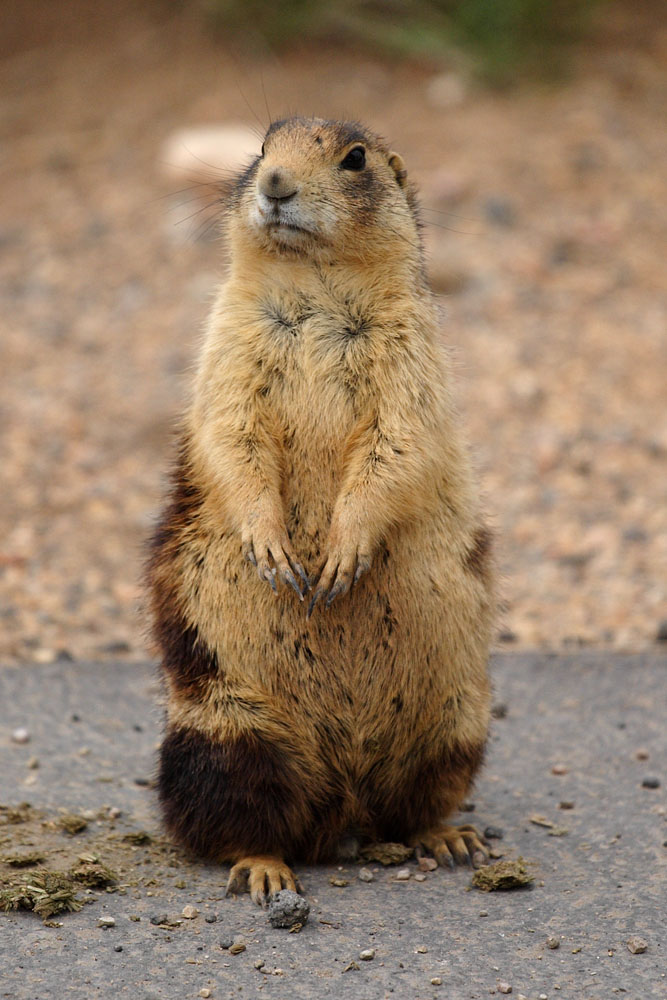
  • While visiting Santa Fe recently, I read an interesting story in The New Mexican, the oldest newspaper west of the Mississippi. Some visiting Tibetan monks had been asked to bless the prairie dogs in Frenchy's Field, a large city park.

    A colony of 50—100 prairie dogs lives in Frenchy's Field. An organization called People for Native Ecosystems looks out for their welfare, opposing negligent trenching activity at the park, and stopping incautious grading at a film shoot site.

    (The film is Beer for My Horses, starring Willie Nelson, Toby Keith, and Ted Nugent. This spring, when told there were prairie dogs hibernating at the grading site, the film crew stopped grading and moved the equipment, expressing the hope that the “poor little fellows” would be okay. I feel sure Willie Nelson wouldn't knowingly hurt a prairie dog. And if Ted Nugent were to go after prairie dogs, his hostility would probably take a form more personal than reckless grading.)

    Melinda Ewell of People for Native Ecosystems issued a press release saying that when the monks blessed them two years earlier, the prairie dogs reacted by “coming to the surface, moving closer to the monks and adding their voices to the chanting and prayers.”

    Ah yes. Adding their voices.  

    It happens that prairie dogs have a variety of specific calls that some people call language. They have distinct calls, or “words,” for “coyote,” “deer,” “red-tailed hawk,” “tall human in yellow shirt,” “short human in green shirt,” and, I suspect, “it's the biologist from Northern Arizona University again.” So I imagine that during the blessing two years ago the prairie dogs may have had quite specific things to add in their adorable little voices. Such as: “OMG! What is that noise? Who are those guys? What's going on? Look out! Monks! Monks to the north! Monks to the south! Monks peering down the burrow! Monks everywhere! Hide the kids!”

    Two days later the paper covered the more recent blessing, running a photo of monks in snazzy golden yellow robes treading among golden yellow flowers. (The story had to compete with one about a plea for manure donations, but that had no photo.) Reporter Sarah Welliver did not question Ewell's description of the prairie dogs participating in the chanting, but observed, “This year, they were quiet during the ceremony.”

    Yes, I think they stayed deep underground, so their subterranean chirping was inaudible.

    “It's those Jehovah's Witnesses again – pretend we're not home.”

    “I think they know we're here. And I don't think Jehovah's Witnesses wear orange.”

    “Whatever. If I have to hear that verse about the little conies in the rocks again, I'll bite somebody. And then they'll say we're rabid.”

    “That's from the Bible; that's Christians. I think these guys are Buddhists.”

    “What, foot-washers?”

    “No, no, no. Buddhists. Mom, you should listen to these guys. They're vegetarians like us. They might have a message of peace for all beings.”

    “Like for owls and coyotes? I don't think so. You're not putting your nose above ground until they are gone. And I don't want to see you reading their literature, either.”

    However, if this dialog took place, it was unreported, and the ceremony took place without disturbance.


    On the way out of town I saw a prairie dog standing near the side of Highway 25, looking toward the passing traffic. Probably thinking about hitching a ride out of town, seeking freedom from religious persecution.

    Utah-Präriehund

    [photograph by Chin tin tin, Creative Commons Attribution 2.0)