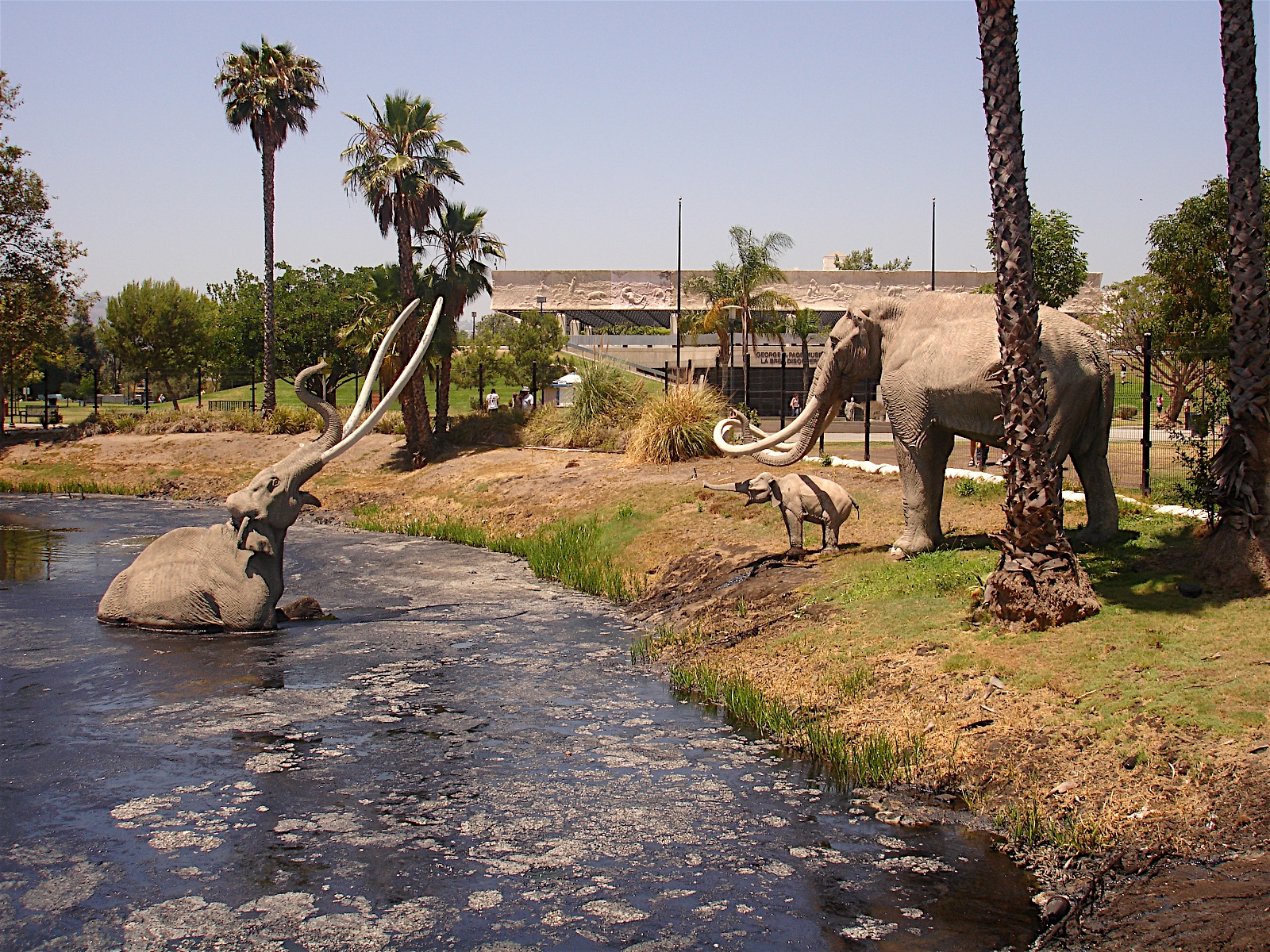
• Glue traps are nasty. Animals caught in them die slow horrible deaths. Some people don't mind that for the mice La Brea Tar Pits. Photo: 3scandal0. Public domain. Not actual mammoths. and rats they intend to trap, but are upset when some other creature falls victim.
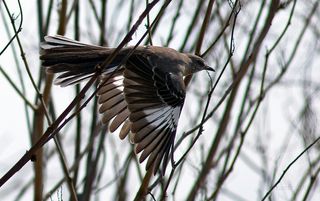
     At a wildlife rescue center, someone recently brought in a glue trap with a mockingbird hopelessly plastered to it. The bird had been bounding along on mockingbird business when it hopped onto the trap and got its feet stuck. It struggled to get free, striking down with its wings, getting its wings trapped, hitting the trap with its bill, getting its bill stuck, and so forth until it couldn't move at all. It was immobile, terrified. Photo: Author Dick Daniels (http://carolinabirds.org/) Creative Commons Attribution-Share Alike 3.0 Unported.

    The person who set the trap found it while the bird was still alive, and rushed it to the rescue centre, swearing they'd never put a glue trap out again.

     What you do in such a case may or may not start with cutting away with the base of the trap. You may sprinkle open areas of glue with sand or some kind of powder, so if you free part of the bird it won't instantly get stuck again, and so your hand or glove won't get stuck. Then you apply an oil like canola oil, to dilute and loosen the intensely sticky “glue.” (Some people use powder for this step too.)

     Now the bird isn't gluey, but it's seriously oily. Still terrified but maybe also starting to feel peeved. It wants to leave.

     Then you have to wash the oil off the angry bird. (Warm water with 1-2% dishwashing liquid.)

     Then you have to rinse the soapy water off the furious bird.

     Then you have to dry the enraged bird, probably with a heat lamp.

     The process is so traumatic that you don't do it all at once, since the bird probably wouldn't survive the shock and horror. It may also have torn feathers out when struggling in the glue.
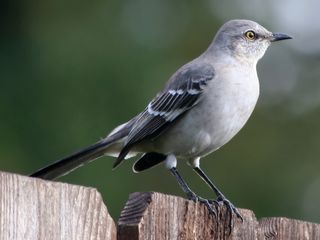
    Photo: Calibas. GNU Free Documentation License 1.2.

    After the mockingbird had been through all this, was unglued, clean and dry, it had a day or two in a warm dim quiet place (with food and water) so its condition could stabilize, and was transferred to another wildlife rescue center with better facilities for small perching birds.   Photo: Mdf. GNU Free Documentation License 1.2.

    When the bird had recovered from its ordeal and had preened its plumage back into passable condition, it was set free.


    I looked on YouTube for videos showing animals being Photo: Pheanix. Creative Commons Attribution 2.0 Generic. http://www.flickr.com/photos/24961289@N06/3403564464 freed from glue traps and cleaned. There weren't many, and the best one was too long to put here. (It's an eastern phoebe. Rather than saying the classic “phoe-be!” or even giving an alarm call, it's clacking its bill in a threatening way. 'I'm clean enough! Stand back! Okay, now I'm mad! Watch out!')
     The video search was depressing. It showed that many people think animals getting caught in glue traps is hilarious, and some people think that other people getting stuck in glue traps is incredibly sexy.

     On the other hand, I did find these excellent video clips suggesting that being stuck in glue is funny when it happens to a perpetually unsuccessful yet irrepressible coyote. Who was the one who put the glue there in the first place. (Think about that, setters of glue traps.)



  • If you're reading this before November 6, 2010, you might want to hurry to Churchill Downs track in Louisville, Kentucky for the chance to be there when the legendary Zenyatta runs her last race in the Breeder's Cup. (Or, yeah, you could watch it on tv.) If you're reading after November 6, scroll down for results.

     Zenyatta's six years old at this writing, a cheerful brown horse with a big following. As a yearling with classy breeding, Zenyatta sold for $60,000. This was kind of cheap, allegedly because she had ringworm. Here she is at auction at Keeneland in 2005, an experience she seems neither to have detested nor enjoyed.


    She was bought by Ann and Jerry Moss, Moss being the M in A&M records. She's named after the album Zenyattà Mondatta, by The Police (signed by Jerry Moss). She's trained by John Shirreffs.

     Zenyatta was a tall girl, slow to get her growth, which is why you didn't see her in the Kentucky Derby or the other Triple Crown races (only for 3-year-olds, and too early in the year for gangly Zenyatta).


    Photo: Banamine/James Wood, courtesy of Caroline Betts's Photos. Creative Commons Attribution-Share Alike. http://www.flickr.com/photos/banamine/5014511275/in/photostream

    Her first race (“maiden” as they call it in racing) was at Hollywood Park in late November 2007, against other beginners. In the video, the announcer concentrates on the front runners, barely mentioning Zenyatta as she trails far behind. Suddenly he notes that “Zenyatta is closing nicely” as she comes up on the outside. He reverts to the horses in the lead, but “Carmel Coffee has the lead, but you better take a look at Zenyatta to run by!” Which she does. And wins by three and half lengths. (A “length” is about the length of a horse's body – 8 feet.)


    In her second race, also at Hollywood Park, they knew Zenyatta was promising, but they didn't understand her yet. “Zenyatta broke very slowly,” the announcer says critically. “A bad start has Zenyatta at the back of the pack,” he says a moment later. The horses at the front battle to overtake each other. Late in the race, “Here comes Zenyatta.” As she pulls ahead to win by three lengths, he exclaims, “Zenyatta is making a mockery of this field!”


    Her third race was in the El Encino Stakes, and again we hear that she's “a little slow to get going.” We hear about the horses in front with occasional mention of how far back Zenyatta is. Finally the announcer gets excited. “Now Zenyatta's lengthening her stride! …Zenyatta's – just an amazing coverage of ground, she just covers so much ground with her bounding stride!” She wins.


    Fourth race, the first at the grade 1 stakes level, and by now the announcers should know that late in the race they're going to be gasping, “Here comes Zenyatta!” Why not script a new line?

    You can find more races on YouTube. In the 2008 Lady's Secret Stakes, for example, another filly, Model, tries a similar late-run come-from-behind strategy, but Zenyatta comes from even further behind, even later, and wipes her off the map.

     She runs against fillies, she runs against colts, she carries heavy weights, and she saves her rush for the very end, coming from second to last, last, and “dead last” to leave the others in her dust. It's a great plot – I never get tired of it – and she loves it too. She's undefeated, having won 19 out of 19 races.

    By now the announcers are coming up with new lines. “Is it a bird? Is it a plane? No, it's ZENYATTA!” says the announcer for the 2010 Apple Blossom Handicap.

    People love her because she wins, because of the way she wins, and because she visibly delights in her work. (I myself would enjoy athletics more if I always won.) In the paddock before the race, Zenyatta prances, raising her forelegs high and pawing the earth. YouTube also has many clips attempting to set her “dancing” to music (without complete success). Here's a non-musical example:


    In 2009 Zenyatta ran in the Breeder's Cup Classic, a race my sister, trying to get the significance of the thing through my head, emphatically describes as the “pinnacle zenith of the whole deal.” It's open to horses of all ages. Really really good horses of all ages. Naturally, Zenyatta ran “dead last” much of the way, leaving so much distance to make up that the announcer said, “If she wins this, she'll be a superhorse!” She won it. 

    She was supposed to retire in 2009, but to wide rejoicing,  was raced again in 2010. Her final race is scheduled to be the November 6 Breeder's Cup Classic, that old thing again, for a purse of $5 million. Will she win? Maybe, maybe not. It's a horse race


    When it's over, she'll retire. To spend more time with her  family. 


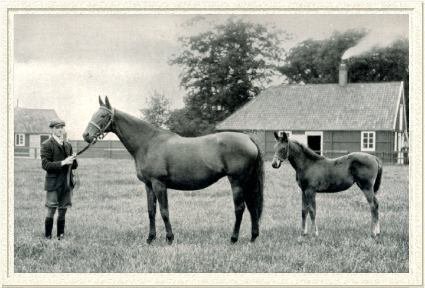
    Sceptre and her child, Maid of Corinth.

    **


    I'm sad to say that Zenyatta didn't win her last race. She came within a nose.

     Her jockey, who blames himself, was even sadder, weeping and saying the loss was his fault. “She should have won and it hurts,” he said. “She ranks up there with the greatest of all time.”

     Zenyatta is used to running on artificial surfaces, and was perhaps surprised to have a lot of dirt kicked up in her face. She persevered and did her famous surge at the end, coming from way farther back than usual. The announcer sounds as if he thought she was winning it. Here's the last 20 seconds of the race.


    “She ran a hell of a race, second by a nose, she was just flying, just flying,” says my sister. “She ran a totally remarkable race.” I asked if Zenyatta knew she lost. “She pricked her ears after she crossed the finish line like she thought she'd won. I can imagine she thought she'd won.”

     I hope she did.

  • Tag the Destroyer has a new bad habit. He goes to the side yard and barks. Bark bark bark bark. Pause. Bark bark bark bark. Pause. Bark bark bark bark. It's a strange pattern. He ignores our cries of rage and despair.

     Tag's getting deaf. He no longer barks at the loathsome package delivery trucks, or at dogs who insult us by being walked past our house, or the serial killers who carry the mail, because he doesn't hear these outrages taking place. But I think his conscience nags at him – I haven't barked at anything in days! – and he resolves to be vigilant. He'll go out in the yard and lurk near the street where he might detect a disturbance.

     Even if he doesn't, he sounds off. Bark bark bark bark! Pause. Bark bark bark bark you get the idea. Luckily, his conscience usually only nags at him on warm afternoons. He doesn't hear if we call his name or yell “Shut UP!” He can sort of hear it if we clap our hands, and he'll fall quiet and try to figure out if that was real or not. For a moment.


    This reminds me of Clea, a dog I once knew.

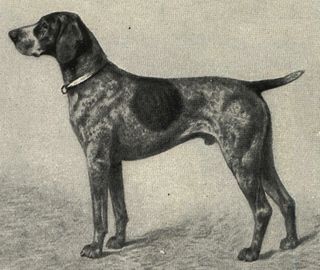
     Clea was a large dog. When I met her she was antique, and had gone very white, and very deaf. I think she was the elegant ruins of a German shorthaired pointer. She belonged to my father's second wife, Vera (a renowned Photo: Bonnie van den Born. GNU Free Documentation License. A young pointer, probably in possession of all its senses. mountain climber).

    Clea seemed somewhat feral, grabby, greedy, not eager to please. But Vera said that Clea had once been a beautifully trained dog. In those days, dainty and precise, she had had exquisite company manners. She knew and heeded common commands, like sit and stay, and also knew and performed fancy tricks, like barking four times when you asked “Clea, what's two plus two?”

      Public domain. Buccleuch Avon, an ancestral Labrador retriever. Bucky, as I shall call him, was born in 1885. By the time this picture was taken, his jowls had gone white. Clea was much whiter than this in old age. What had happened? Apparently, as Clea went deaf, she decided that if she didn't hear you tell her to do something or not do something, she didn't have to obey. Even if she knew what you wanted. You didn't want me to grab the bread off the table? You should have said something. You did? Well, I didn't hear you.

     Loophole!

    Clea wasn't conscienceless. She still considered herself bound to protect the home from intruders. Due to her  deafness, she never detected any intruders. But periodically she would stand on the top deck and bark threateningly, so intruders would know she was on duty. The house was on a hillside, and the deck projected out impressively, so intruders over a great area would hear Clea's fierce warning.

     Alas, the idea that possible intruders should be menaced Photo © BrokenSphere / Wikimedia Commons. GNU Free Documentation License 1.2 or later. A dog I've never met, so who knows what its issues are. usually occurred to Clea around three or four in the morning.

     Clea would utter a series of barks, and then pause, listening in case anyone dared to bark back. No, apparently they didn't. Excellent! She would bark some more, pause, bark some more.

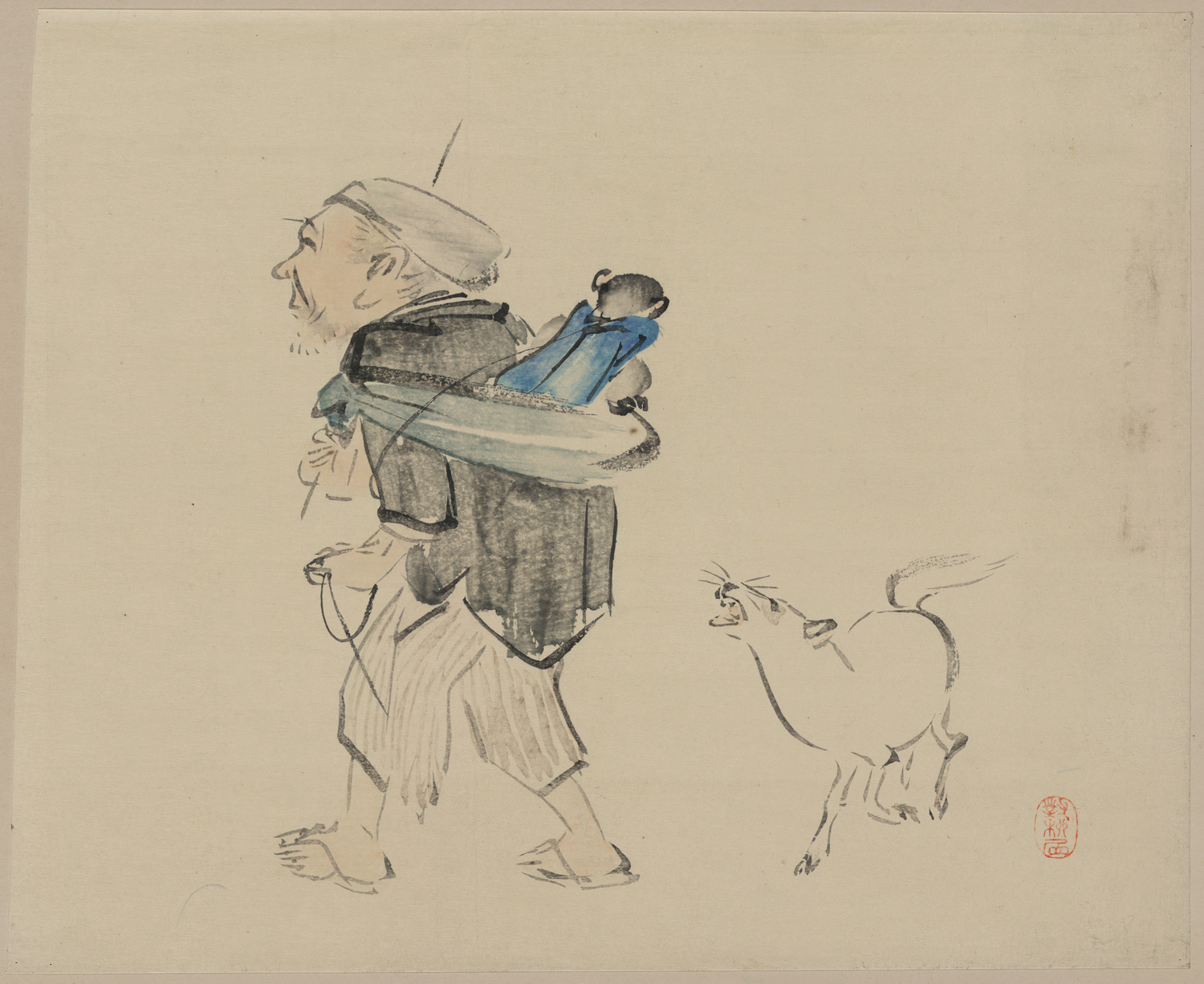
     This was interspersed with Vera calling, “Clea! Clea! Be quiet! Clea! Come in! Clea!” Which Clea didn't hear. Finally Vera would fling on a robe and rush out on the deck to drag Clea indoors, still barking defiantly into the night. Zeshin Shibata. Public domain. Supposedly a dog barking at a monkey trainer, but I say it's barking at the monkey, and I'm not at all sure it's a dog. Don't you think it looks more like a tiny horse? A tiny barking horse?

     (Why not close the door onto the deck? Um, Clea had other problems sometimes found in old dogs, and night-time deck access protected the rugs and floors.)


    So Tag's strange barking pattern is familiar. If his hearing worsens, we could get him a vibrating collar – no, not a shock collar, a vibrating collar – such as people use with dogs who were born deaf. When yelling doesn't work, you can catch the dog's attention by spooky action at a distance.

     Tag's a good-hearted dog and doesn't use his poor hearing as a loophole. Barking in the side yard is a mild inconvenience. And it's a reminder of how feeble his hearing is getting, and what that's like for him.

     Gradual hearing loss can feel as if people are paying less and less attention to you. We still speak to Tag all the time. “Who's a good dog?” we ask. “Who's the foulest, stinkiest dog in the whole world?” “Who's been eating grass and puking on the rug?”

     But if Tag doesn't hear it, he doesn't know it, and it seems as if we've stopped talking to him. We seem less interested. Life gets lonelier. We have to remember to get his attention, rub his belly, pat him, scratch his forehead between the eyes, hug him, wrestle with him. That's what the strange barking signals. Not intruders, but the intrusion of time.

    Photo: The Wish Hounds (1993) by Lou Hamilton located at Croft Country Park, Swindon. © Copyright Subarite and licensed for reuse under this Creative Commons Attribution-ShareAlike 2.0 Licence.

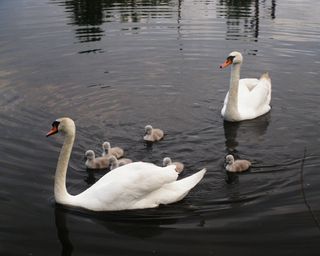
  • Last week’s post was of swans, mayhem, and the devotion of a husband and father.

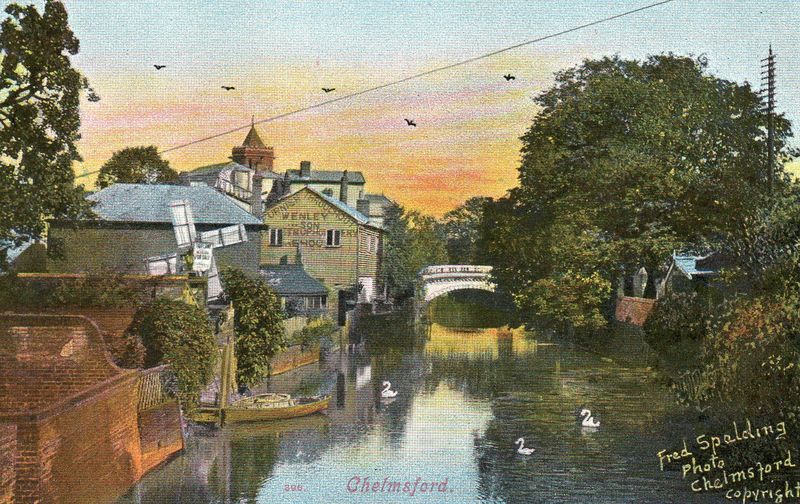
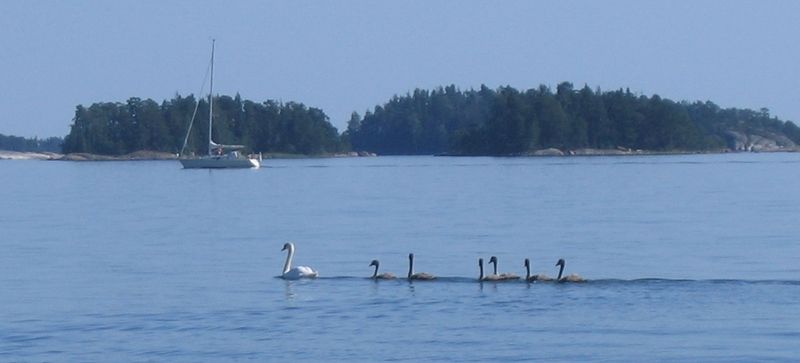
    Afterward my attention was drawn to a recent incident in Britain, in which authorities felt compelled to relocate a family of swans. The father of the family, Hissing Sid, had maintained a desirable territory on the River Chelmer, Essex, for perhaps 25 years, growing “increasingly crabby.”
    Public domain. From the postcard collection of F. Spalding, Chelmsford. Swans from left to right, Nancy, Sid, Johnny.

    Sid, aka Horace, appears to have begun a vendetta against the Chelmsford Canoe Club, attacking canoes almost daily. His technique: knock oars out of people’s hands, and then go after the canoeists themselves. They say he tries to peck holes in boats.

    Finally he made the very bad choice of knocking a 13-year-old girl out of her canoe and then attempting to drown her.

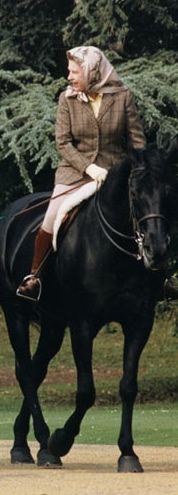
    Naturally, the worried people turned to the Queen – okay, Photo: Public Domain. I redacted Ronald Reagan from this photo because I am not aware that he had any connection with swans. The Queen is riding her mare Burmese, who lived to be 28. http://www.reagan.utexas.edu/archives/photographs/large/c8454-18.jpg to the Queen’s Swan Marker, whatever – and got permission to relocate Sid, his wife Nancy, and their six  home-schooled children. (English mute swans, if wild, belong to the reigning monarch. Because they do.)

    A remote body of water with no canoes was located forty miles away in Sussex. This was the idea of the canoe club secretary, who said that she “thought of Lafarge, a quarrying firm, who are always digging large holes and filling them with water, so I gave them a call and they were able to help.”

    Once the cygnets were deemed old enough to bear up, the entire family was captured, bagged, and taken to Sussex. They were reported to be “gliding serenely” around Gallows Hill quarry, which is closed to the public.

    Perhaps they were less serene than they seemed. Violence is not the only tool at a swan’s command. Instead of attacking Lafarge’s estates manager, overpowering him, and forcing him to drive them back to Essex, the swans simply flew home, appearing on the Chelmer to the dismay of canoeists and the delight of swan viewers.

    Or so we were told by the Daily Mail (whose website has some really obnoxious ads). “Asbo swan makes 40-mile journey back to his old stomping ground,” they proclaimed.

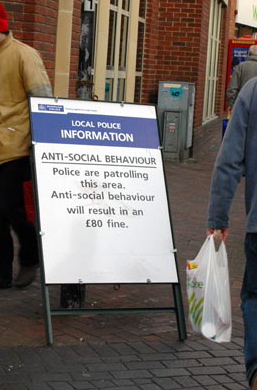
    Photo: zorilla/Barry. Creative Commons Attribution 2.0 Generic. http://www.flickr.com/photos/58528342@N00/74548462/ “Asbo” is short for Anti-Social Behaviour Order. That’s an order under which a troublesome person is kept out of certain areas, or forbidden to do certain things. (Not the  Queen’s idea, Tony Blair’s idea.) Apparently anti-social behavior can include such things as public drunkenness, vandalism, a type of breakdancing called windmilling, spitting, and of course, attacking canoes.

    But according to more recent reports, the swan family now cruising up and down the beautiful Chelmer River, accumulating grievances, is not Sid, Nancy, and their sprogs. It is a completely different swan family, with one more cygnet. “This is a nice, friendly family,” said the canoe club secretary.

    Let’s hope they stay friendly. Why not give them free canoe lessons as a gesture of welcome? And let’s hope Sid and Nancy continue to enjoy the privacy of their quarry.
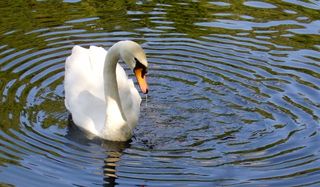
    Photo: Ronja Addams-Moring. Dual-licensed under the GFDL and CC-By-SA-3.0, 2.5, 2.0, and 1.0.

    The tale of Sid and Nancy was brought to my attention by Daffodil Planter, who has a splendid gardening blog. Sometimes Daffodil Planter’s gardening interests and my animal interests intersect, as in her post about the Next Big Thing: Backyard Turkeys. Of course, turkeys seldom have to deal with canoes.

    Photo: Public domain. The great thing about being a backyard turkey is kicking the backyard ducks out of the backyard wading pool.

  • Earlier this year, a wildlife rescue center took in a mute swan (Cygnus olor).

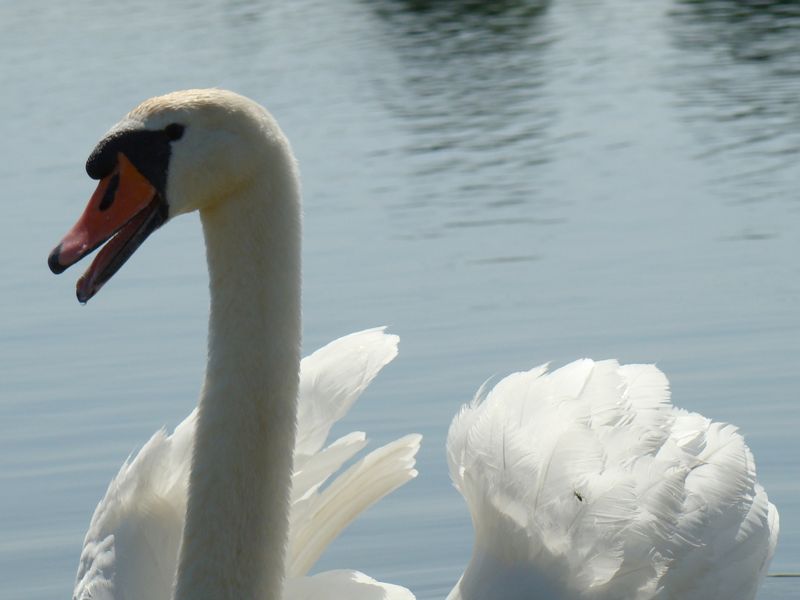
    Mute swans aren't native birds. In North American we have tundra swans, whooper swans, and trumpeter swans. Some people buy mute swans, the lovely birds of classic European imagery, and place them on ornamental water to make it even more ornamental. Sometimes the swans go wild, move to wilder waters, raise families there. Because they're not native, they don't have the same legal protections, and because they're not native, some people disapprove of them. (It's said that they're hard on aquatic vegetation and ecosystems.)

    But this swan wasn't feral. He dwelled on ornamental water where he had been placed, only now he was very sick and looked like he might stop dwelling at any moment. He was too weak to stand, a pancaked fowl.

    Since he was a private bird, he might have gone to a private veterinarian, but vets who see swans are rare, and the wildlife center has waterfowl experience. The swan was lucky.
     Photo: Wisniowy. Public domain.  
    Once I found a sick bird on a beach. We were in an unfamiliar town, but I eventually got a number for a wildlife rescue center. “I found a bird…” I began, but a bored voice interrupted. “We only take native species,” it said. “You Photo: From PloS. Creative Commons Attribution 2.5 Generic. Starling, so very not a native.
    probably have a starling. We don't take them.”

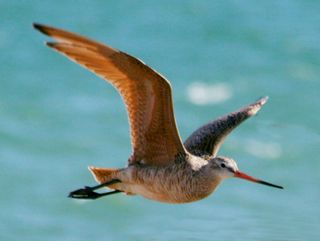
    “Actually I think it's a marbled godwit.”

    “Oh!” the nativist cried in sudden interest. “Bring it right in!” Photo: Dick Daniels (http://carolinabirds.org/). Creative Commons Attribution-Share Alike 3.0 Unported. Marbled godwit, native but undocumented.

    But most wildlife centers take some non-native species. They may not be delighted, but they won't turn you and your bedraggled find away from their door.

    The swan had been admitted, and treated, and was feeling a lot better. He could stand now. His benefactors had gone on the buddy system – they didn't go alone into his pen.

    Swans are big. And grumpy. Not only do they hiss and bite, but with their wings they can hit very hard, so hard that it is said they can break human bones. People are charmed by the fact that swans are devoted spouses and parents, but one way swans express that is by beating up anyone who comes too close to their family.

    Three of the most common reactions to seeing a swan can be summarized as:

        “Oh look, how beautiful!”
        “Those things can break your arm.”
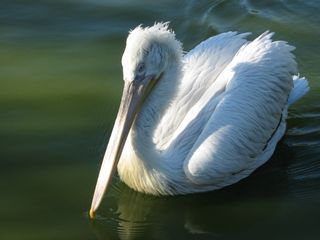
        “What is that, a pelican?”

    I like to summarize three swan reactions as:

        “Yes, you may admire my beauty from a great distance.”
        “Not as long as you stay a great distance away.” 
        “A pelican? I'm gonna come over there and break your arm.”
    Photo: Mindaugus Urbonus. Creative Commons Attribution-Share Alike 2.5 Generic. “Have you ever even seen a pelican?”

    No one wanted to mix it up with rescue swan now that he had his strength back. Perhaps he was ready to be returned to his ornamental water. But there was a problem. He had lost weight and he wasn't gaining it back. Despite his recovery, he wasn't eating well.

    They discussed his case at morning rounds. What was going on with him? Someone asked if he had a mate. Yes, a mate and cygnets too. Ah. He was lonesome for his family. Treatment plan: reunion.

    (This shows a good understanding of different species. You wouldn't ask this question about a male peacock or a male hummingbird, because they aren't family men.) Photo: Zofey. Public domain.

    The swan missed his family. To me it also seems possible that he worried about them. I doubt a swan envisions particular scenarios – monstrous humans kidnapping his wife, falcons grabbing his children – but possibly this swan envisioned his family Photo: Arnaud 25. Public domain. “No, I'm not a swan. But I get that all the time.” alone, without him on guard, and he wanted to be back defending them. Taking names and breaking arms.


  • I had heard that the Audubon Zoo in New Orleans was a really great zoo. The people who told me this (not zoo aficionados) were never able to say what was great about it. They didn't mention rare species, successful breeding programs, or brilliant enrichment schemes.

    It was just really great.

    I recently got to go for the first time, and I think I know the reason for their enthusiasm.

    Frozen daiquiris.

    They sell these along with the usual fast food available at American zoos. I asked the server what was in them, thinking maybe it was some sort of lime soda. She found the question strange. “Rum?” she said.

    I shouldn't have been surprised. New Orleans is the wettest town I know, one that could have a banner at the airport reading WELCOME SLOPPY DRUNKS. It just hadn't occurred to me that this spirit extended to the zoo.

    Shocked, I purchased a daiquiri and set out to see some animals.

    I am interested in zoos. I loved the giant anteaters, who were milling around madly, awaiting their chance to go back into their night quarters.
      Public domain. Rhubarb rhubarb rhubarb.

    The humans were like zoo visitors everywhere, inclined to stand next to a large sign that explains that orangutans are not monkeys but apes and say “Look at the monkey, Jesse!” Yet they were less frenetic than usual, maybe because of the heat. In the languid humid air, people swanned dreamily along the paths. Some were clasping icy beverages. Perhaps the slow aimless pace of the visitors is less jangling to the animals.

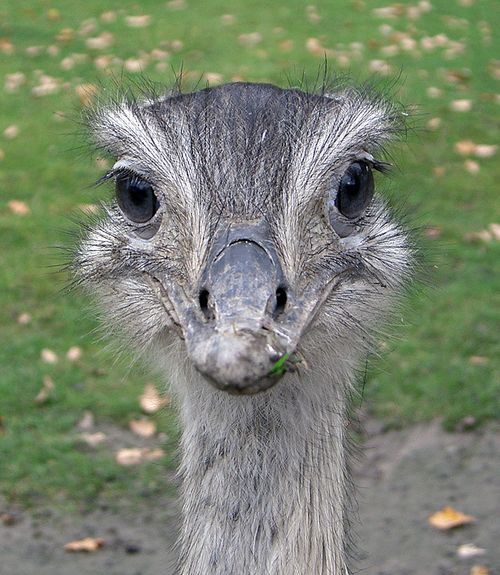
    While walking around the pond in the South American Pampas exhibit, I heard a splash. I turned to see a rhea hastily climbing out of the water. The other rheas seemed  fascinated and started following the damp one. (What was it like? Was it fun? Was it cool? Did you float? Are you gonna go in again? Go in again! You should go in  again!)
    Photo: Zwoenitzer. Creative Commons Attribution-Share Alike 3.0 Unported. Seafaring is in my blood.

    Was the rhea imitating the ducks in the pond? No. Later investigation revealed that rheas are known to swim. Darwin saw rheas swim across the Santa Cruz River in Argentina. So this zoo-born rhea was experimenting with a skill used by its wild relatives. That was interesting.

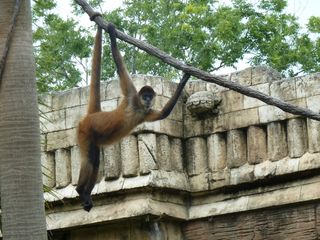
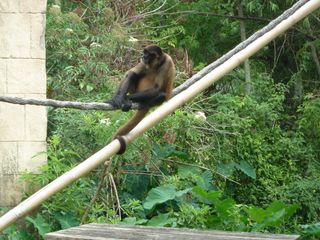
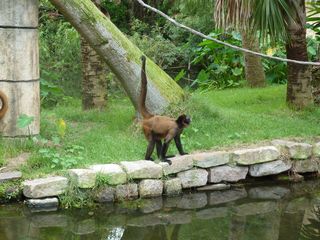
    Finally I arrived at the spider monkeys (Ateles geoffroyi)Black-handed spider monkey. Public domain.
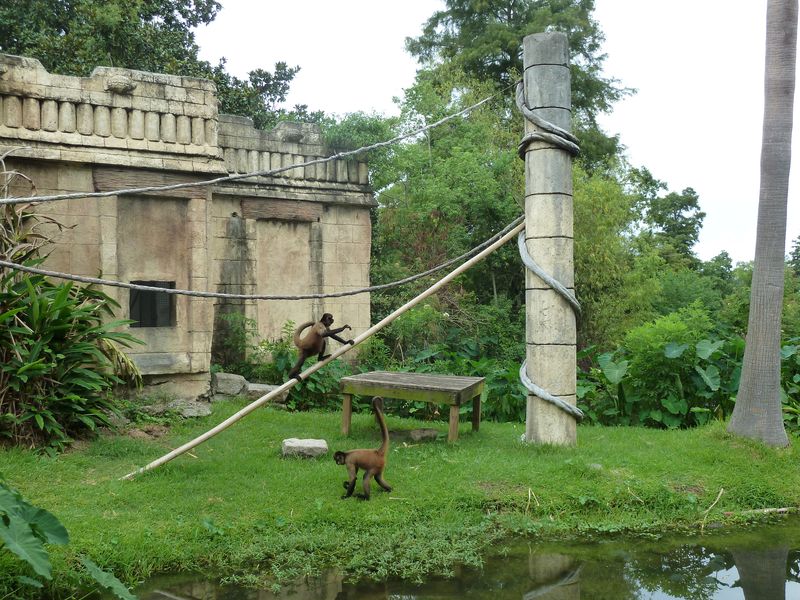
    The large exhibit, modeled on Central American ruins, was good to look at and, more importantly, full of things  a monkey can do with a prehensile tail.

    If you had such a tail, you could hook it over something.  Or twine it Public domain. Oh, I could juggle if I wanted to. along something.
       

    You could use it for balance, like an outrigger,  or for artistic emphasis.

    You could use it to carry things, even if all you have to tote is a bunch of grass.

      Public domain. I am carrying this handful of grass in my tail because I can. Why do you ask? In a vision I now imagine the Audubon zoo extending its hospitality to its occupants. I behold anteaters even more avid to get into their evening quarters, where frosty beverages are served. I suppose that an individual with a prehensile tail is perfectly fitted to stroll a slack rope while holding a daiquiri. Dreamily, I even wonder if this policy hasn't already been implemented. Unscheduled swimming is the sort of thing alcohol often inspires in young creatures.

    What a great zoo.

    Public domain. While you're up, get me some ice.

  • The sea turtles I saw at the Gulf World facility were young Kemp's ridleys, a critically endangered species. They were three to five years old, roughly as long as footballs. They had been minding their chelonian business out in the middle of the Gulf, 30 to 80 miles from land, sculling around in the Sargassum weed, when agh bleccch, there was oil in the water, Sargassum_weeds_closeup oil in the weed.

    Sargassum, also called Gulfweed, is the same stuff that denotes the Sargasso sea. It's a giant brown algae. It forms mats on the ocean surface, creating a floating world. Hundreds of species  live in it, including fish, shrimp, seahorses, tiny crabs, copepods.

    Sargassum weed. Ocean Explorer/NOAA. Public domain. What's a Kemp's ridley? Ridley, a word of unclear origin, is a category containing two species of sea turtle. A fisherman named Kemp sent a couple of this kind of ridley to a museum. They're the rarest species of sea turtle. I'll call them Kemps.

    The Gulf of Mexico is their sorry stronghold. They nest on its beaches. Nowadays most nest on a single beach in Mexico. A few nest on Padre Island, in Texas.

    If you're a young Kemp, you hatch from one of a bunch of eggs your mother buried in the sand a month or two ago. If no one interferes, you and your siblings dig out of the sand and swim to sea. Many hungry predators will be waiting. You're less than Photo: Zereshk. Creative Commons Attribution-Share Alike 3.0 Unported. two inches long, so even a gull can swallow you. Most of you won't make it.

    If humans have intervened you may in fact hatch out someplace like the Kennedy Space Center in their nice air-conditioned warehouse. Or they may have moved you to another beach, put a fence to keep predators away, stretched Photo: Zereshk. Creative Commons Attribution-Share Alike 3.0 Unported. netting over the area so parasitic flies can't get to you, and be waiting to escort you to the safest possible water. It's like they don't trust you or something.

    If you don't get eaten right away, you swim far out to the sargassum. There you eat little crabs, shrimp, jellyfish, and mollusks that live in the weed. In a few years you grow to a size that's not such a convenient, popular morsel. No gull or heron can swallow you now.

    One day you suddenly tire of the sargassum life. 'Hiding in the weeds is for loser babies!' you decide, and move to waters near shore, the neritic zone. Maybe the crabs are bigger there. Crab seems to be the favorite food of Kemps. I feel the same way. Photo: Tony Weeg. Creative Commons Attribution 2.0 Generic. [http://www.flickr.com/photos/60899586@N00/2972275072] No turtle will find me here.
    (Okay, that's enough second-person narration. I want to be out of this before I discuss sexual maturity.)

    Neritic life is good, and the Kemps keep growing. When they're sexually mature, which is somewhere between 11 and 35 years old, they mate at sea. If they're male, they may never go to land again. If they're female, they'll have to go back for brief periods just to lay eggs.

    The species is critically endangered because of human activities. The most severe damage has come from turtle-hunting, turtle egg-hunting, and accidental drowning in shrimp nets. In Mexico and the U.S., laws have been passed against hunting turtles and their eggs, and some nesting beaches have been protected. Laws saying shrimp nets have to have Turtle Excluder Devices on them have been passed, and are sometimes obeyed. The population has been increasing since the mid-1990s, as measured by more turtles nesting.

    Many stages of sea turtle life are poorly understood. People don't get many chances to observe them going about their daily life. We don't know their lifespan. We don't know what their Rathke's glands are for. But here's an early piece of information that's come out of the oil spill's turtle rescue effort: Kemp children are quarrelsome. Young green sea turtles and young loggerheads can be housed together, but the Kemps need to be in separate tanks or they fight.

    This seems mysterious to me. Why do Kemps fight and the other sea turtles don't? Maybe it's something to do with a diet of crabs, a food that fights back. I like to think the Kemps' combative attitude will help the species survive.

    I dare you to disagree.

  • It seemed like a grave ceremony at a turtle temple. A silent line of identically-dressed people lifted turtles from tanks one at a time. Each turtle was carried in the same ritual position and taken through the same stations. A wand was waved over each turtle. Quiet words were murmured. Inscriptions were made. Tags were produced. Each turtle in turn was transferred to another serious person in identical garb, who examined it mutely and seriously, inspected the inscriptions, placed the turtle in a special container, and affixed the tag. Observers stood in silence.

    I was in the Florida Panhandle, reporting on the Deepwater Horizon oil rig explosion and spill. This was a turtle-washing facility set up in a locked area at the back of Gulf World in Panama City Beach. Media hellhounds like me were being let in, on our best behavior, to behold an early-morning transfer of young turtles from the oiled-turtle-washing-and-stabilization center at Gulf World to a turtle-rehab center at SeaWorld Orlando, on the other side of Florida. (The turtles aren't on display to the public in either place.)

    There were reasons for the eerie details. The identically-clad people were Gulf World and Sea World employees in uniform (royal blue shirts, black or khaki shorts, rubber boots). They walked in lines because there was a narrow zone between the “dirty”/oily side of the facility and the clean side. The silence was to avoid getting the turtles 
    Photo: Zereshk. Creative Commons Attribution-Share Alike 3.0 Unported. This is a new hatchling, much younger than the ones I saw, still unaware that "pier rat" is a career possibility. used to human voices. No one wanted them to grow up into “pier rats.” The turtles were carried in the approved way for turtles this size, faced away from the human, held behind the front flippers. Some turtles sculled with their flippers as they were carried. The wand checked a microchip implanted in each turtle.

    The grave atmosphere came from respect for the rare animals – endangered Kemp's ridleys (Lepidochelys kempii). It came from determination to help mitigate the oil's damage (and awareness that many more turtles had died). It came from the knowledge that everything was being recorded. (A few times I overheard an acolyte whisper the name of a departing turtle: Mikey! Buzz! It's Lance!)

    Media attention was the least of it. Scientific data that might be gained was also subsidiary. (There weren't nearly enough turtles to make a study.) It was explained that the turtles were evidence. The microchips, records, re-checking of records before packing each turtle in a labeled container – all maintained the chain of custody.

    CSI: Gulf of Mexico.


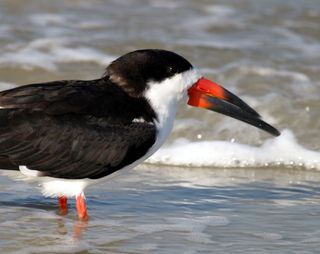
  • In Fort Jackson, Louisiana, the little bird having the oil washed off was struggling passionately. I couldn't figure out what it was. Not a
    Black skimmer. Photo: Bruce Tuten. Creative Commons Attribution 2.0 Generic. gull, not a tern – could it be a rail? No, surely not. I was told it was a black skimmer.


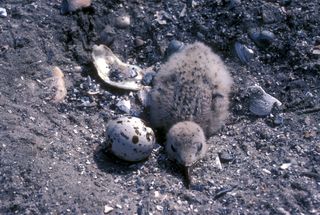
    But I've seen skimmers (Rynchops niger). They don't look like that. I was told it was a young one. Skimmers don't hatch with those bizarre long bills with the lower mandible longer than the upper. (How would that fit in an egg?)

    Then I remembered other bird species in which little snub bills of
    Photo: Donna A. Dewhurst for the Fish and Wildlife Service. Public domain. the chicks give hardly any clue to the crazy big bills they'll have as adults.


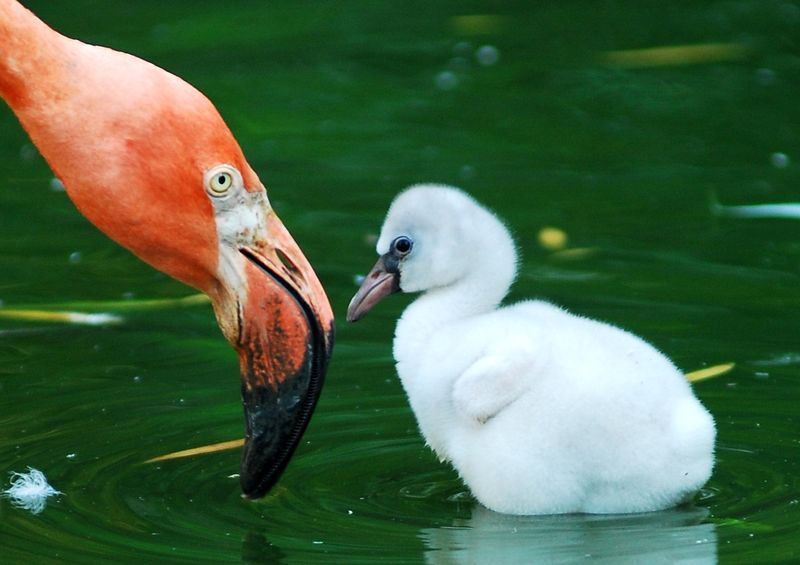
    Chicks' bills have to fit in the egg, and they have to be used to get out of the egg. After they hatch, there's time for bills to elongate or bulk up, to curve down or up, or to acquire interesting attachments if necessary.


    Photo by Pavel Vlček for Zoo Ostrava. Public domain.
    The clean little skimmer was moved to the rinse table, where it continued to resist. You rinse my wing, I'll stamp on your hand! Stop or I'll I bite you! There, I bit you! I might do it again! Finally they wrapped the defiant creature in a towel and hustled it off to the drying room. (Many birds never seem to think of stabbing people in the eye with their bills. Instead they bite. You don't want to be bitten by an eagle or a swan, but when an egret bites you, it's okay. They don't have the leverage.)

    I went looking for video of birds in which the chicks have to go through some serious bill growth to catch up to their parents. I found these spoonbills (Platalea
    ajaja
    ) at Animal Kingdom in Orlando.


    Also this shoebill (Balaeniceps
    rex
    ) family at the Lowry Park Zoo in Tampa.
    The
    chick doesn't have the big bill yet, but it has the slow serious
    demeanor you need to carry off a giant smiley proboscis.

    There's an unsettling video from a camera inside a trumpeter hornbill (Bycanistes bucinator) nest. Trumpeter hornbills, like some other hornbills, have a system in which the married female seals herself into a nest cavity with an adobe of her own devising (mud, fruit pulp, and bird dung, if you want the recipe). She leaves just a small opening through which food can be passed.

    Once immured, she lays eggs. In fact, as long as she's in there, and not flying around, she molts her feathers. Her devoted spouse may help her build the wall. The advantage is thought to be that this keeps their eggs, and then chicks, safe from predators, and perhaps from other hornbills.

    Time passes, the eggs hatch into revolting little hornbills, and the male feeds them all. When it gets simply too crowded in the nest cavity, the mother breaks herself out.

    In this video of captive breeding, the hornbill cam shows not-dressed-for-company mother and repulsive not-dressed-at-all child in the nest. At the far end is the opening, and there is much excitement and whining as the devoted father starts passing snacks in to his wife, who feeds them to their horrifying child. Who looks even more disgusting with banana oozing out of the corner of its bill – but notice what a normal-looking bill it is.

    Some birds go with a cuter look.
    Photo: Ingrid Taylar. Creative Commons Attribution 2.0 Generic.
    Even if you think they're adorable, though, it's more polite not to stare and talk about whether chicks have their parent's nose. You might embarrass them. They might get all shy.

    Photo: Ingrid Taylar. Creative Commons Attribution 2.0 Generic.
    Oh, here's what a grown-up skimmer's bill is good for. For this to work out, the water should be clean.

  • Everyone knew this but me, I guess. On the right beaches, clams will tickle you.

    I was recently in Gulf Shores, Alabama, wondering how the oil spill
    P1000279 clean-up was getting along. It was getting along great. At least on this beach.

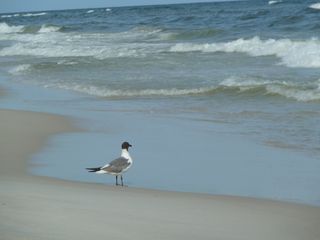
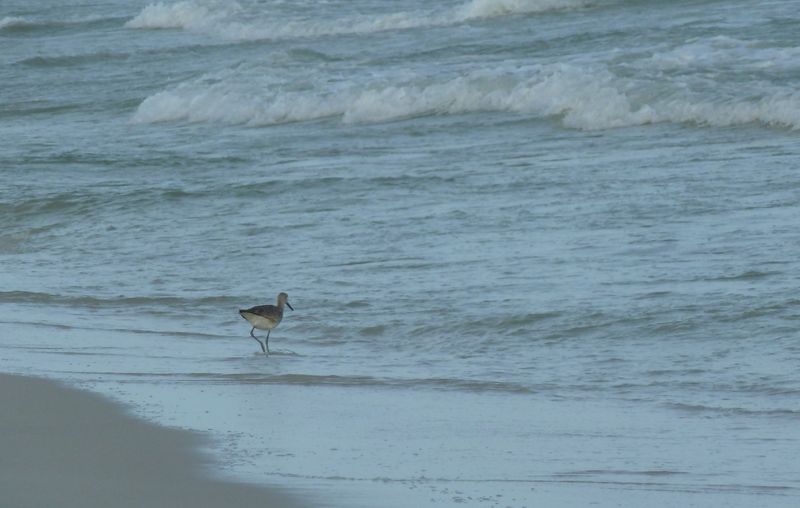
    I'd never visited Alabama beaches. The sand was luminously pale, almost as white as the sugar it is compared to. And clean. The water was clear except for swirling sand. Along the beach birds lined up, studying the water. When a wave receded, a gull or a willet would often sprint forward and snatch something.
     

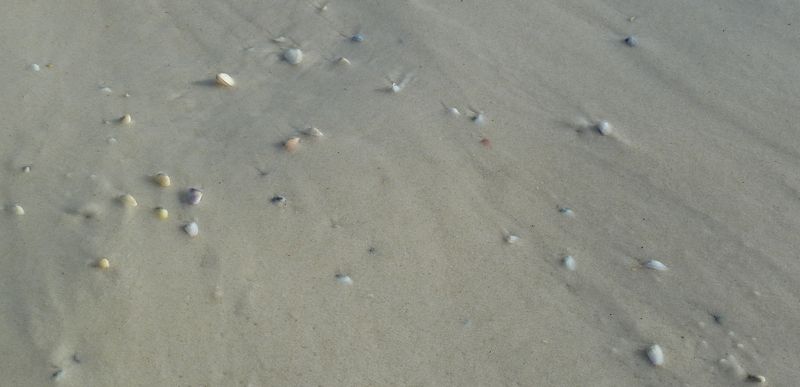
    I waded in to the mild water. When waves receded, small shells became visible. Nice.
    P1000297

    What's this? Shells were tipping on end and sinking into the sand. Tiny living clams were reburying themselves. I'd never seen such active, speedy shellfish.

    Just below the surface, the sand was thick with little clams, less than an inch long. When a wave uncovered them they quickly dug
    P1000288 back down.

    Hey, cool. It turns out that you can dig your foot into the soft sand and edge it over so it's beneath the clams. When the next wave ebbs, drawing away sand covering the clams, they burrow down and tickle your feet. (“What's this? Weird rock? Feels soft – can I dig through it? How about here?”)

    I thought I saw a bigger clam. I tapped it to see if it was empty. It was a crab, quick to pinch.

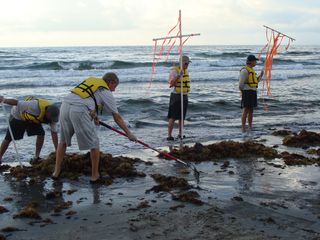
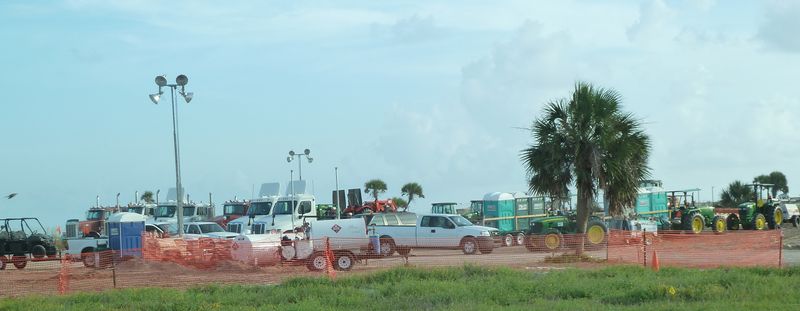
    Nearby was a large temporary yard full of equipment that had been used to clean the beach, earth-moving machines, bins, portable toilets. (It's easier to clean a beach than a marsh.)
    P1000316

    In a nearby oysterhouse* I remarked to a waiter, whom I'll call Luke, on how great the beaches looked. He said the oil had mostly come ashore in the form of tar balls. Unfortunately people had gotten the idea that the whole area was drenched in sheets of oil – and tourism had plummeted. I thought the place looked busy, but he said it was perhaps 40% of normal for the season. “It's the press,” he said. “They keep showing those same pictures over and over.”

                                                (*Oyster stew, followed by fried oyster salad. Marvelous.)

    True. Who wants to see a picture of normality when they can see a picture of news? If there's an oil spill, you want to see a picture of oil. If a man bites a dog, you'd like to see a picture of that, not a
    Photo: Pete Souza, Executive Office of the President of the United States. Public domain. picture of a man and dog on good terms. Those who supply pictures and narratives want to provide the ones that people are interested in. (It's also easier to photograph a beach than a marsh.)

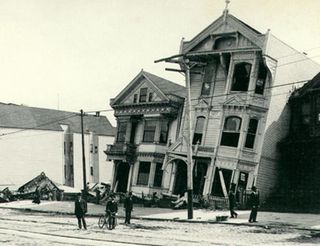
    If there's an earthquake, you want to see a picture of earthquake damage. After the 1989 Loma Prieta earthquake, a dramatic photograph of a collapsed house in San Francisco's Marina district was shown around the world. It wasn't false. That house did collapse, a piece of the Bay Bridge did give way, an Oakland freeway overpass fell and crushed people to death in their cars. It was also true that most houses, most roads, most bridges were unharmed.

    I told Luke that most San Franciscans got desperate calls from far-away friends and family who were afraid we were trapped in collapsed houses. “We saw the pictures! Are you okay?”
    Different house, different earthquake. Still, made you look.
    In good newsgathering, dramatic pictures come with perspective. We need to be told what percentage of houses are damaged and whether in fact there was more damage in less-famous cities seventy miles away – or what percentage of beaches have oil. (People also need to pay attention to that information.)

    It's more difficult with breaking news – when the facts aren't all in yet, when the facts are changing. When no one knows yet how many houses have structural damage (and they're unwilling to commit themselves “for insurance reasons”). When a beach that's clean might have tar again in the morning.

    Luke asked what I did for a living. Bravely, I told him I was with the press. He didn't fling anything. He beamed. “I'm jealous of you!” he said.

    Earlier, I stood calf-deep in the lovely Gulf waters, and called a friend. She was in California, but she grew up in Alabama, and spent childhood vacations with her family at Gulf Shores. Earlier television broadcasts had about broken her heart. It gladdened her to hear that the sand was clean. The water was clear. The clams were zippy.


    P1000314