• Some scientists (Robert L. Pitman and John W. Durban, to name a few) were cruising Antarctic waters. They were looking for killer whales, a.k.a. orcas.* (Why don't they invite me? I love this stuff.) The researchers wished to document a crafty behavior seen among some seal-eating orcas, in which they team up to knock seals off ice floes. Up to seven orcas swim in a row to make a wave big enough to tip the ice, and wash the seal off. Cool, if you're not a seal.
     Orca_pod_southern_residents

    One morning the scientists chugged up to ten orcas and found them in some kind of splashy muddle with a couple much-larger humpback whales. Bellowing like crazy, the humpbacks were whacking the water's surface with flippers and tails. The orcas were milling around. Then they moved on. The researchers guessed the orcas might have been checking to see if the humpbacks could be weak enough to attack. But when they looked at their video, they noticed a Weddell seal in the melee, between the humpbacks, and wondered if the orcas had been after the seal.Humpback_underwater

    The scientists pursued the pod of orcas, who soon spotted a crabeater seal relaxing on an ice floe. Oho! Inconsiderately, the orcas generated a wave which broke the floe into pieces. The seal, “distraught,” was now on a much tinier floe. Before the orcas could make their next move, the same humpbacks appeared. Again with the bellowing and splashing! As Pitman and Durban recount in the November 2009 Natural History the orcas “seemed annoyed,” and took off without harassing the seal further. Hmm, “mobbing behavior,” the researchers concluded. Interesting.

    Next week they were spying on a different batch of orcas, attacking a different Weddell seal on a different ice floe, when who should appear but a different pair of humpbacks. The orcas had actually knocked the seal into the water, but before they could grab it, the seal swam toward the humpbacks. When it got to the closest one, the humpback rolled onto its back in such a way that the seal was swept up onto the humpback's chest. The humpback arched its body to lift the seal above the water, nudging it with a flipper so it didn't slide off. “Moments later, the seal scrambled off and swam to the safety of a nearby ice floe.” A bigger one, I presume.

    Pitman and Durban changed their speculation from “mobbing behavior” to “maternal behavior.” They refer to “allomaternal care.” They go on say that while this is called instinct when it's seen in a whale, when a human does it “we call it compassion…. But sometimes the distinction isn't all that clear.”

    My guess is that yes, there was compassion. The humpbacks felt sorry for terrified seals. But maybe they also disapproved of the orcas' behavior. They sound outraged. Buncha violent creeps terrorizing pipsqueaks. Can't someone relax on some ice without you guys ruining everything? You make me feel like bellowing! Put that pinniped down! Why don't you pick on someone your own size? Bite this!

    This suggestion certainly leaves me open to charges of anthropomorphism. But the outrage people feel when they see bullies picking on a weakling doesn't necessarily arise from the most abstractly intellectual workings of our fabulous neocortex. Like compassion, maybe it's more visceral than that. Maybe it comes from the bottom of the heart.
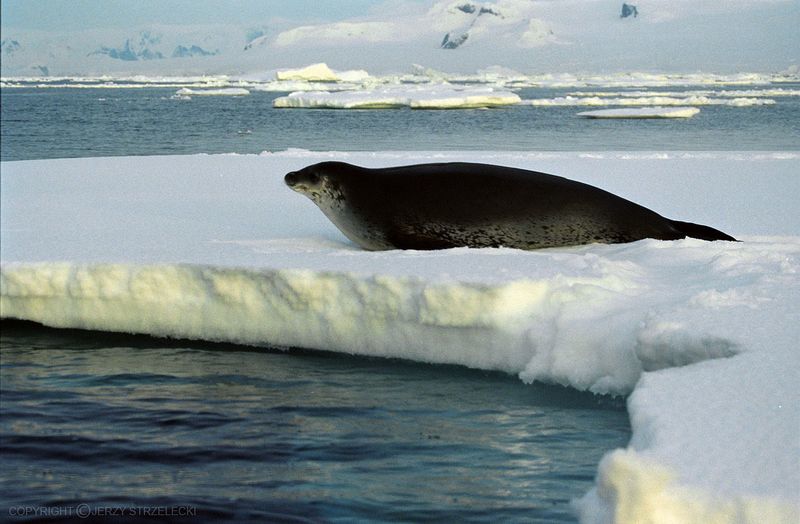
                                                                                                     Antarctic_(js)_8
    (Photograph by Jerzy Strzelecki.)

    *Orcinus orca (Linnaeus). People have various views on “killer whale” versus “orca.” Is it calumny to call them killers? Is it sentimental PC-ishness to call them orcas? (Are you calling Linnaeus PC?) This article called them killer whales. I use both terms. Mostly orca, because it's shorter.
  • Writing about animals in scientific journal articles is required to be dry, impersonal. Often when researchers write books about the same animals they show more feeling. George Schaller is an eminent scientist and conservationist (“You have a moral obligation to help protect what you study”) who has written about his research among animals, including mountain gorillas, pandas, and tigers. More free-ranging than journal articles, those of Schaller's books I've read still display considerable restraint.

    It's different in person. At the Jhumki Basu Memorial Lecture at Stanford recently, Schaller praised tigers as “generous” (for not eating him), peccaries and pigs in general as “wonderful pets… as good or better than dogs,” and paused at a slide of mountain gorillas in Rwanda. “Aren't they beautiful?” he asked. “They have the sweetest faces. When you are near them you just feel like going up and giving them a big hug.”

    Oh yes. The audience uttered a collective sigh of longing. Big biophilia hug!

  • Yesterday we went to see salmon spawning and of course it ended in a fight in a bar.
     

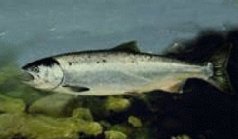
    We went to Lagunitas, California, to the lovely Leo Cogan Fish Viewing Area, and eventually saw a large female coho on her redd, redd being the word for the nest area she excavates in the gravel, where she lays her eggs. In clouded water, her whitish tail gleamed.

      Coho
    At St. Mary's Pub to celebrate the 800th iteration of David's Pointless Minute, I told a wildlife-aware friend about this. I used the word nest. He said the correct term was redd. I agreed, acknowledging that I had talked down to him by using simpler terminology. He alleged that he was offended. I alleged that in that case my work was done.
     
     Salmon: always a contentious subject.

  • Doug Bertran, a filmmaker who made Orca Killing School, told a story after the showing at the Wild and Scenic Film Festival in Nevada City. This is the film about which the program cautions, “Warning: violent animal scenes.”

    He was at Peninsula Valdez, Argentina, filming some orcas who've perfected a trick of lurking offshore at high tide and then suddenly shooting up onto the beach to grab a sea lion. In order to take the sea lions by surprise, the orcas don't echolocate (which creates tell-tale clicking sounds). They rely on hearing to detect their prey. Bertran's assistant was setting up a heavy piece of photographic equipment in the shallows. It occurred to no one that the sound of the eighty-pound device scraping against the beach pebbles might be a lot like the sound of a tasty sea lion pup scraping against the beach pebbles. Suddenly the assistant looked up into the faces of five orcas. They'd hurtled up for a look.

    After viewing him, the orcas hurled themselves back into deeper water.

    “I shot it,” said Bertran happily. It wasn't in the film, though. Is it because the sight of a photographer's assistant not being eaten lacks drama? No, according to an interview Bertran gave to The Union, it's because local authorities don't want ecotourists to get ideas.

  • Update on the SF Zoo's tool-flourishing aye-ayes:

    I recently got a short tour of the normally-closed nocturnal house. This now houses an elderly mouse lemur and a thriving aye-aye family. Sabrina and Warlock produced a son, Dobby, who looks just as eccentric as his elders. He is only the 2nd second-generation aye-aye born in the US, so the Zoo is extremely proud of him. Asked how they accounted for this success, our guide said that it seems aye-ayes like to mate high in the trees, and the nocturnal house has a high ceiling which can be utilized for this romantic purpose.

    Several months ago, to general surprise, Sabrina and Warlock produced another baby. It had been expected that it might take the couple five years to have their next child, not just one year. (Ah, high ceilings…) This daughter is allegedly still unnamed. (I find this unlikely. I suspect she has a name but it is being kept secret for one or more of the usual bizarre zoo rationales for withholding such non-Nature Facts. Or they are just embarrassed that they named her Morticia or Grimalkin or whatever.)

    I asked about the wrench. “Oh yes,” said the guide. “We give them wrenches for their teeth.” It seems that aye-ayes have ever-growing teeth, like rodents, and need hard objects to gnaw on so their teeth don't overgrow. For this purpose they are given bamboo and hard wood. And wrenches.

    The guide, who does not appear to have been at the Zoo very long, seemed to find this perfectly mundane, and offered no explanation for how wrenches came to be the dental device of choice.

    (“Sure, we give the aye-ayes wrenches for teething. Just like we give the otters eggbeaters for grooming, and we give the pelicans assault rifles for nest-building. It's environmental enrichment.”)

    Until I get a different suggestion, I am sticking with the hypothesis that this practice originated in an aye-aye act of pilferage.

  • When I was a child in Massachusetts, my mother and her best friend used to visit the tidepools at Nahant. They kept salt-water aquariums at a time when no one did that, and they peopled these artificial tidepools with native creatures they collected. Usually they took their children with them, which included me and my best friend Molly.

    When those days vanished in puffs of smoke – divorces, remarriages, moves across country – the visits to the tidepools ended for Molly. Three thousand miles away, my mother started over with Pacific tidepools. The only relationship that endured was the friendship between Molly and me.

    Recently I visited Molly in Massachusetts. Her mother died some years ago, and when I persuaded Molly that we should revisit the tidepools, no one could tell us exactly where on Nahant we had gone. On the only available day, we went to the Nahant peninsula at low tide.

    We drove around looking for rocky shores with tidepools. We asked a jogger if she knew where there were tidepools, or where we could park so we could look. She said “Nahant's a great town, but it's not very friendly to people who want to park.” She didn't know what to suggest.

    When we came to East Point, I was pretty sure we had found the place. The minute you see East Point, you know it has great tidepools among its tumbles of big rocks festooned with seaweed. But those tidepools are next to Northeastern University's Marine Science Center (which didn't exist when I was a kid). You can drive out there, but they won't let you park. It's miles out, at the end of the peninsula, surrounded by lovely seascapes and No Parking signs, another of the scenes of my childhood that's off limits.

    We parked anyway.

    A field trip of high school kids was there. Most were only interested in jumping from rock to rock and climbing the cliffs. We met one intelligent boy who had figured out the best ways to locate crabs and was happy to pass along his discoveries. When angry teachers made the class leave because a few kids misbehaved, Molly and I had it to ourselves.

    Molly examined a pool with a deep, irregular crevice on one side. “There's something in here,” she said. We could just see two suspicious eyes peering back at us. A crab? A shrimp? Neither of us felt like sticking our fingers in to be pinched. On dry land we might have put a small stick in the crevice to see if the creature would grab it and be pulled out. “The thing about tidepools is there are no sticks lying around,” Molly noted.

    Cracks in the rocks were filled with clusters of small gold snails. There were little dark green crabs. There were mussels and barnacles and limpets. There were small sea urchins, banded with white and tan and pale green. There were pink five-rayed starfish. One silver dollar-sized starfish had four long rays and one extremely short one that was regenerating after some unfortunate incident. There were pink algae like the algae in California, both the kind that makes a flat crust on rocks or shells and the foliose kind like pink parsley. They seemed like they might be a slightly different pink than the California kind, a bit more of a salmon color, but I couldn't be sure.

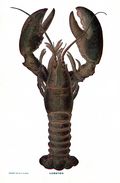
    We had to hurry away, but I found great things under the last few rocks. Under one were two little crabs feasting on a pulled-off claw from a big crab. Under another were two eel-shaped fish like California blennies, with elegant narrow vertical stripes on the dorsal fin. Under a third was something I had never seen in the Pacific: a Lobster_NSRW baby lobster, three or four inches long, holding up its claws in case it needed to pinch me. It was a handsome, subtly-colored creature, and the minute I saw its suspicious eyes I knew that the creature Molly had found peering from the crevice had also been a baby lobster.

    From talking to my mother and looking at Molly's mother's notebook, it seems that they never found lobsters at Nahant back in the day. On the web I found some recent research saying you can find baby lobsters in the intertidal zone (research about how to do a lobster census). I also read that the main Atlantic_cod predators of baby lobsters are codfish. I knew that overfishing had drastically reduced the number of cod in the last few decades. I also knew that the lobster fishery was in great shape, catching lots of lobsters. So I suspect that the reason our families hadn't found baby lobsters at Nahant years ago was that the cod had been getting them. The fact that Molly and I found lobsters may be a sign of codfish in trouble.

    In the short time we had been out on the rocks we had gotten a parking ticket.

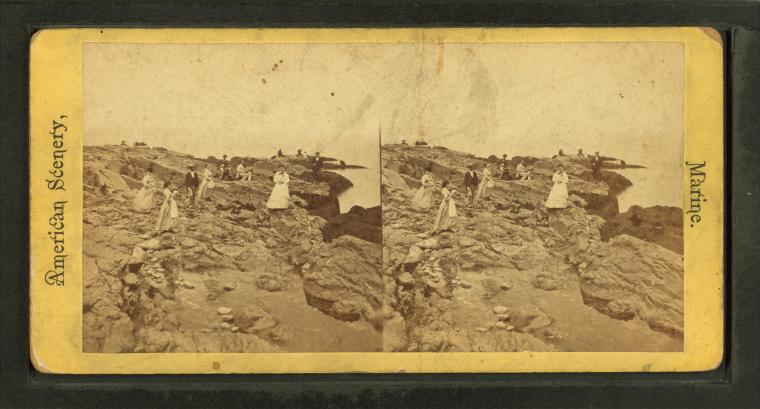
    Shore_view,_Nahant,_from_Robert_N._Dennis_collection_of_stereoscopic_views

  • Even if they have never seen a cat and their parents have never seen a cat, the smell of cat hair fills a young rat with horror. You can easily measure aspects of this. For example, if they smell a cat in the “play chamber,” normally exuberant young lab rats won't play as much, an effect that lasts for five days. (It's just so creepy there.)

    Much rat play consists of roughhousing and squeaking. A slightly fearful rat tends to freeze. A more fearful rat tends to run like mad.

    Researcher Jaak Panksepp, a student of rat playtime and author of the interesting text “Affective Neuroscience: The Foundations of Human and Animal Emotions,” suggests that some laboratory research may have been confused by the fact the researchers didn't control their experiments for the possibility that some rats were exposed to the dreadful smell of cats, either experimental subjects or pets. (“How did you do on the maze?” “Not so good. I was freaked out by that horrible smell. You?” “Same. The feeling of impending doom messes with my concentration.”)

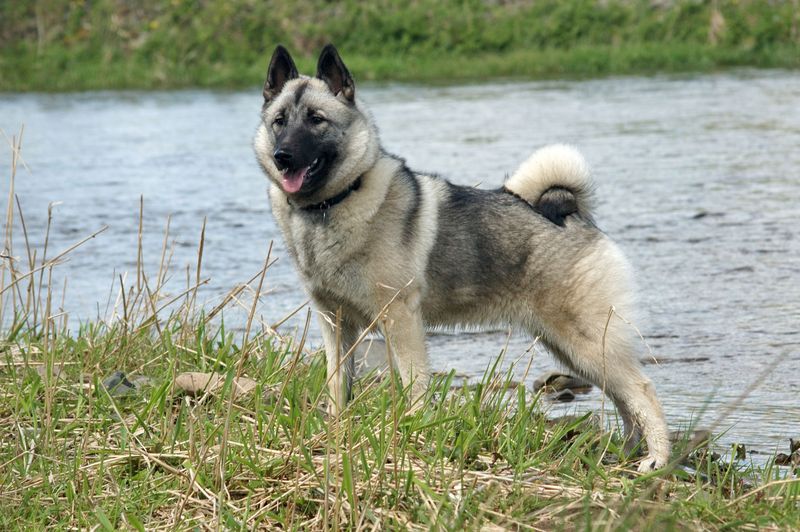
    Rats are also innately alarmed by the smell of ferrets, and Panksepp worried that he might be confounding his own research by carrying the scent of his dog Ginny. He tested this hypothesis by covering the floor of the play chamber with Ginny's fur. Since she was a Norwegian elkhound, he had plenty of fur to work with. Happily for Panksepp, it seems that elkhound fur doesn't scare rats. They frolicked at undiminished levels of activity. I imagine rats rolling over and over while clouds of fur rise around them, like puffs of dust in cartoons. This “suggests that the ancestors of such domestic dogs did not normally prey on rats in the wild,” Panksepp writes.

    Norwegian_Elkhound_1
    Dmitry Guskov

    “Elkhound” is the English version of “elghund,” which of course means “moose dog.” Since the job of the elkhound is to find a moose and bark at it incessantly until the hunter can lumber up and kill it, you wouldn't want the dog to be distracted by rats when it should be yammering at moose. Perhaps its wild ancestors were similarly fixated on big game and hence there was no survival value for rats in viewing them with horror.

    But what is the view of a naïve young moose? (“That play chamber is much too small!”)

    Moose_calf

    [Leroy Anderson for U.S. Fish & Wildlife Service]

  • Modoc County Road 1 runs through the long, narrow Surprise Valley in high desert of northeastern California. It's in a narrow band between mountains and alkaline lakebeds in the valley bottom. In this narrow band irrigation allows agriculture. Sagebrush has been replaced by grain crops.

    Ground squirrels feel the need to dash across this road constantly. Agriculture has let their numbers boom. In spring these exuberant rodents (Spermophilus beldingi) are bulbous with health. When I visited in April, the huge ground squirrels looked to me like young marmots. To hawks and eagles they look delicious and convenient.

    Since there aren't many trees in Surprise Valley, the abundant raptors don't have many places to perch. Power poles by the road are decked with birds of prey, including bald eagles.

    To ranchers the ground squirrels look neither amusing nor tasty. They look destructive. Squirrels churn and pile the soil, making harvest harder. They eat crops. They excavate holes perfect for snapping the legs of livestock. They puncture drainage ditches with their burrows. They clear large areas around their burrows, endeavoring to turn alfalfa fields into Spermophilus subdivisions.

    Ranchers used to poison them with sodium fluoroacetate, also called Compound 1080, until that was banned. They turned to guns. In March the Surprise Valley Chamber of Commerce holds a Squirrel Roundup. This doesn't involve actual rounding up but simply shooting as many as possible. Out-of-towners pay to participate. It's possible to shoot 300-400 in a day.  Hawks and eagles enthusiastically scavenge carcasses. “The fields… were…  swarmed by bald eagles, falcons and hawks… enjoying an evening meal,” wrote Jean Bilodeaux for the Klamath Falls Herald and News.

    Judging by the number of squirrels frisking about in April, there are many ground squirrels left unscathed and unhumbled. I called the Chamber of Commerce to ask what kind of ammunition is used in the Squirrel Roundup, hoping to be told that lead is forbidden. They did not return my call.

    Another source told me that squirrel hunters use lead. That narrow band of the Surprise Valley must be intensely pocked with the stuff. It probably doesn't hurt squirrels that aren't actually shot.

    But birds of prey are gobblers of gravel. Lacking teeth, they grind food in their gizzards, which they stock with little pebbles. They swallow chips of bone, glass, or metal, anything hard that seems to them like it would make cool false teeth. When a hawk finds shot in a carcass, it's like getting take-out Chinese food with free chopsticks. Lead can also flake, tainting a carcass.

    Lead poisoning kills an unknown number of raptors every year. Most deaths occur in the wild and aren't reported. But some birds end up in wildlife rescue centers, where the problem is diagnosed. Sometimes it can be successfully treated, sometimes not. (Other birds can get lead poisoning too. Birds of prey simply encounter more due to their gourmet interest in dead bodies.)

    Lead poisoning is such a serious problem for California condors that self-supporting birds living wild lives must regularly be captured so blood lead levels can be tested and they can undergo chelation therapy if necessary. Biologists climb up or rappel down to nests to cleanse them of unsalubrious items chicks will swallow. The use of lead shot is banned in an exclusion zone covering about 20% of the state to lessen the amount of lead in condor habitat. The Surprise Valley is not in that zone.

    Reader, if this report has inspired you to sign up for next year's Squirrel Roundup, please don't use lead ammunition. Use steel, copper, tungsten, unicorn horn. Lead is cheaper, but you're spending hundreds of dollars to shoot hundreds of squirrels. You can afford it!

    Thanks.

  • A chic dark-phase red-tailed hawk (deep brown except for her brick-colored tail), was demonstrating ground squirrel prep on a power pole by the side of the Surprise Valley Road in Modoc County:

        Place your ground squirrel on top of the central pole.
        Remove portions of the squirrel and place them on either arm of the crossbar for more precise work.
        Stand on a crossbar arm, hold squirrel portion down with one talon, and shred squirrel with your beak.
        Eat squirrel bits. From time to time, pause and glare.
        To get from one arm of the crossbar to the other, spread your wings a little, and hop.
        Continue until you have eaten everything raptorially possible.
        When you are done, perch above the sign that says HIGH VOLTAGE and look noble.

  • When a hummingbird feels trapped, it tries to go up and out. Passionate little birds, they are not easily discouraged. They fling themselves against barriers again and again, nimbly avoiding any who try to capture them, heedless of hunger, thirst, and exhaustion, and heedless of people shouting, “Forget the skylight, dummy! Drop down a yard and you can fly out the bazzfazz door!”

    They will do this till they drop unconscious. When they revive, they may notice another way out, or they may again try to shoulder their way out of the skylight. Sadly, even the cheesiest Home Debris skylight is too sturdy for this.

    I've rescued four hummingbirds from possible death-by-skylight. One had flown into a miserable concrete bathroom structure at a beach. It was getting dark, the hut was unlit, and the only hope the bird perceived was to batter its way through the skylight. Rescue was a simple matter of clambering atop the stalls and ensnaring it in a T-shirt. (Okay, and convincing certain humans that it was a hummingbird and not the most humungous bee of all time.)

    On another day, two had flown into a long overhanging veranda-but-this-is-California-so-we-call-it-a-deck and could not grasp that the skylight over the stairwell was not the way out. “There's two of us! And we're furious! No barrier can stand before us!” The skylight had a ledge below it, on which the hummingbirds would periodically drop in fatigue, acquiring nasty coats of dust and spiderwebs. Because this was over a deep stairwell, getting close enough to throw shirts over them was rather difficult.

    The most recent needle-nosed fool flew into a kitchen and made the same old mistake. This was one of those amazing high-ceilinged kitchens with shelves up so far that giraffes can easily find food dishes, naturally with a large skylight, and retrieving this bird involved climbing a stepladder set on top of a granite-topped cooking island, and flailing gently with a long-handled smelt net and a tattered pool net.

    The hummingbird, flagging but game, had no intention of flying into the smelt net, although he was willing to perch on its rim between assaults on the skylight. Finally he made the mistake of taking the smelt net for granted while avoiding the approach of the pool net, and he was snared. And forcibly escorted outside, and briefly admired, and allowed to fly off in a rage.